
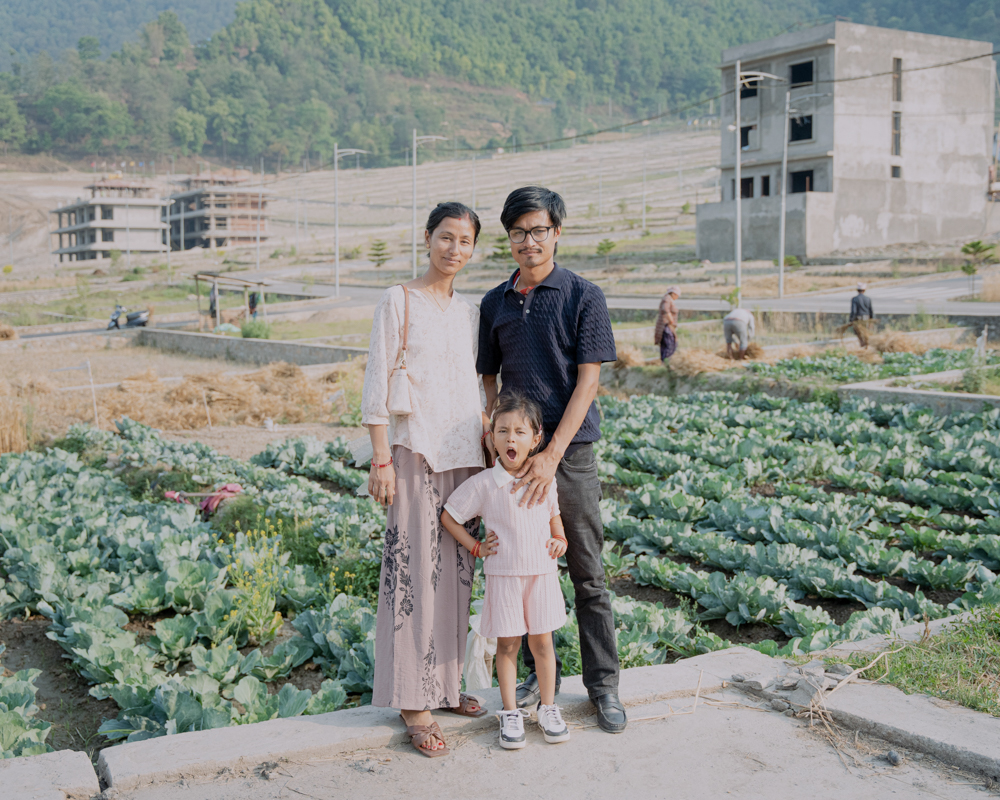
A portrait of Sujan Shrestha and his family in front of their land, where cabbage is planted. After returning to his birthplace after six years, Sujan finds a vast difference in his hometown. The once green landscape, filled with growing crops, has now been transformed into barren land for plots, with some fields already converted into housing complexes. © Amit Machamasi

Not the Same Anymore

Amit Machamasi

2025 – Bhaktapur, Nepal

About this series

Change is inevitable, yet some changes carry a bittersweet undertone. Growing up in Sipadol, Bhaktapur, I was surrounded by the vibrant life of a farming community. Early mornings spent in the fields with my father, the familiar faces of farmers greeting me after school, and the lush greenery of terraced fields were integral parts of my childhood.
As time passed, however, the rhythm of life began to shift. Urbanization crept in, altering not only the landscape but also the essence of our community. Fertile lands gave way to brick kilns and housing plots. Traditional Newari architecture, which once added charm to the city, is now being replaced by towering concrete structures. The companionship and shared sense of purpose during planting seasons have gradually diminished, replaced by a more fragmented and individualistic way of life.
While development has brought modern conveniences such as paved roads and stable incomes, it has come at a cost—the loss of fertile land, degraded air quality, and fading communal bonds. The vibrant city of farmers and fields I once knew has transformed into a hive of relentless construction and commercialization.
This story reflects how unplanned urbanization can strip a place of its character, turning it into a shadow of its former self. Sipadol, my hometown, is no longer the same. And as I look ahead, I can’t help but wonder—will it one day become just another concrete jungle?
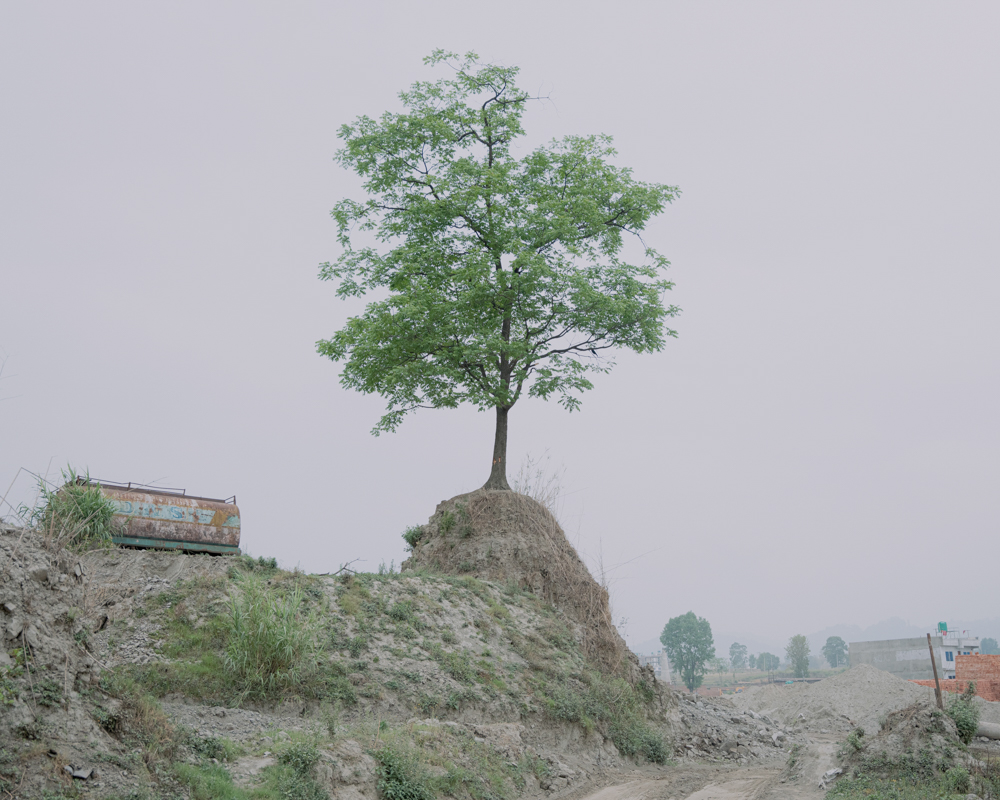
A lone tree stands among the debris, once fertile farmland now turned barren due to brick kilns and residential development. © Amit Machamasi
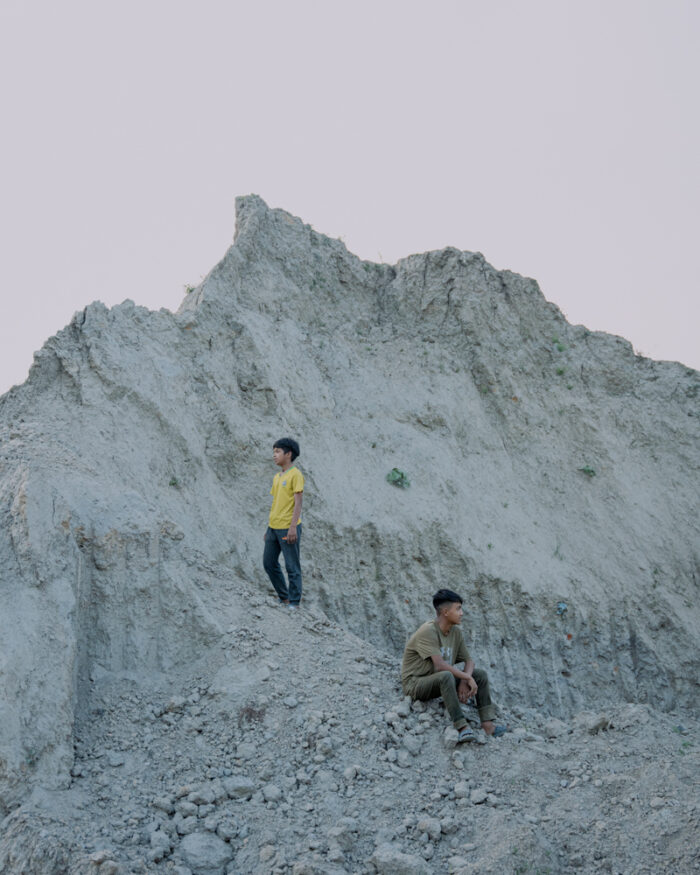
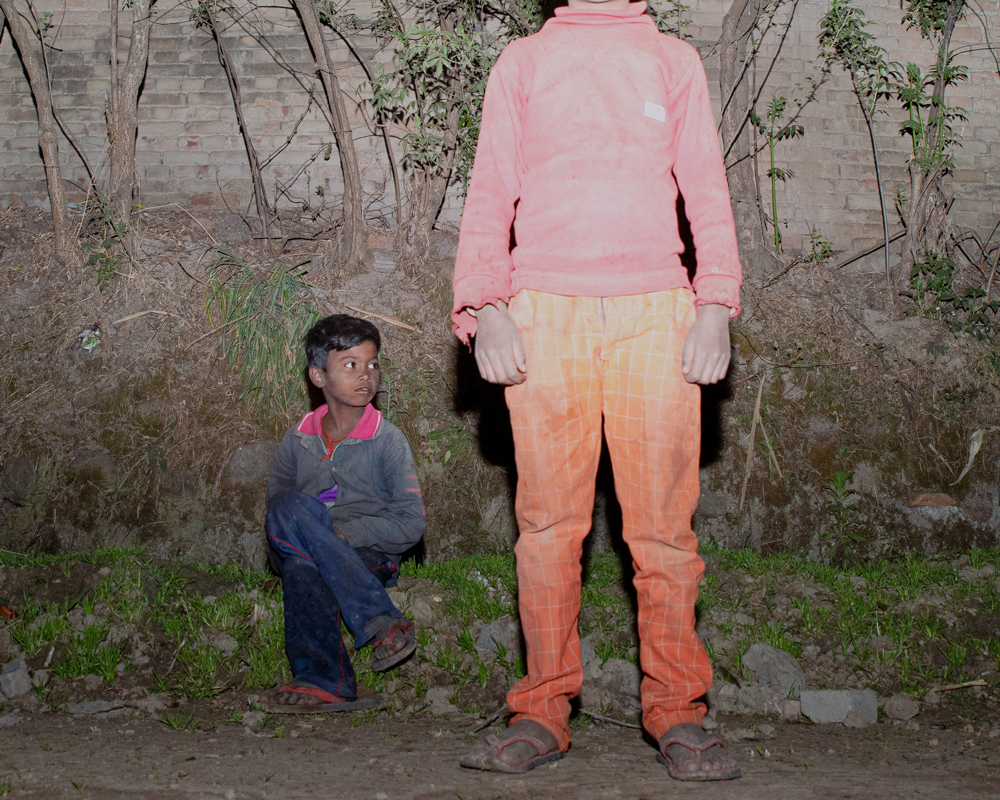
Amidst the setting of a brick factory in Sipadol, Bhaktapur, a young boy sits on the ground while another stands brightly illuminated in the foreground. These boys are part of the workforce in the factory, where people from the Terai region and India come to work for six months. © Amit Machamasi
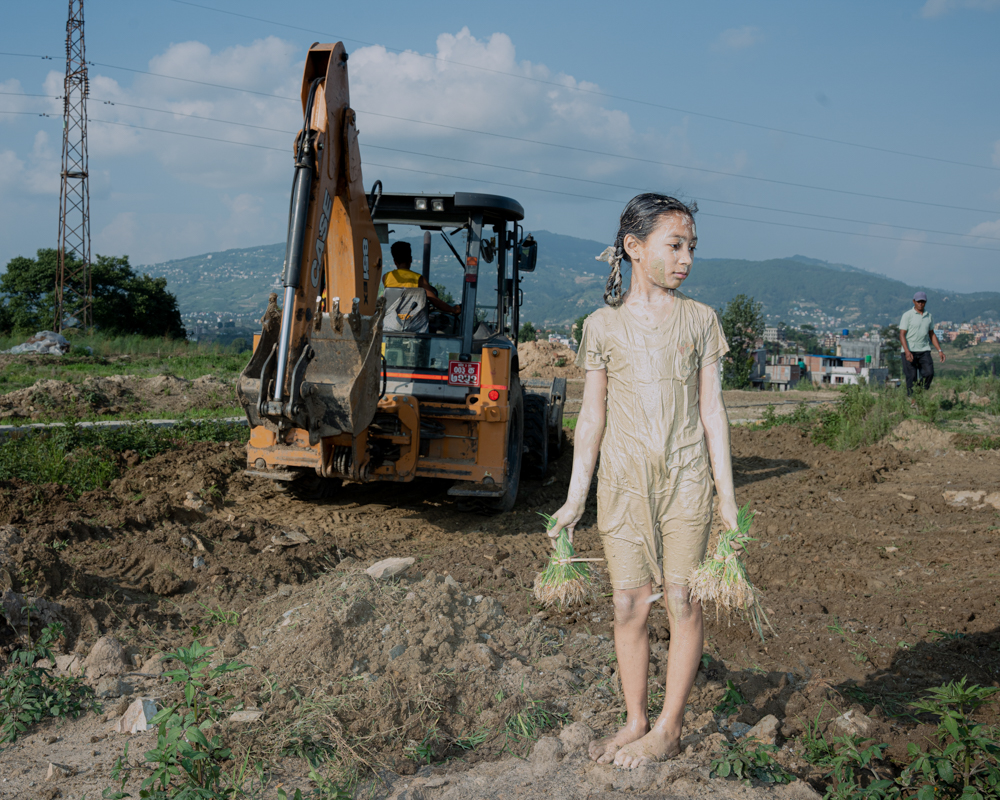
An excavator makes way for land plotting even as a child prepares to plant rice saplings in Bhaktapur's Sipadol, Nepal. © Amit Machamasi
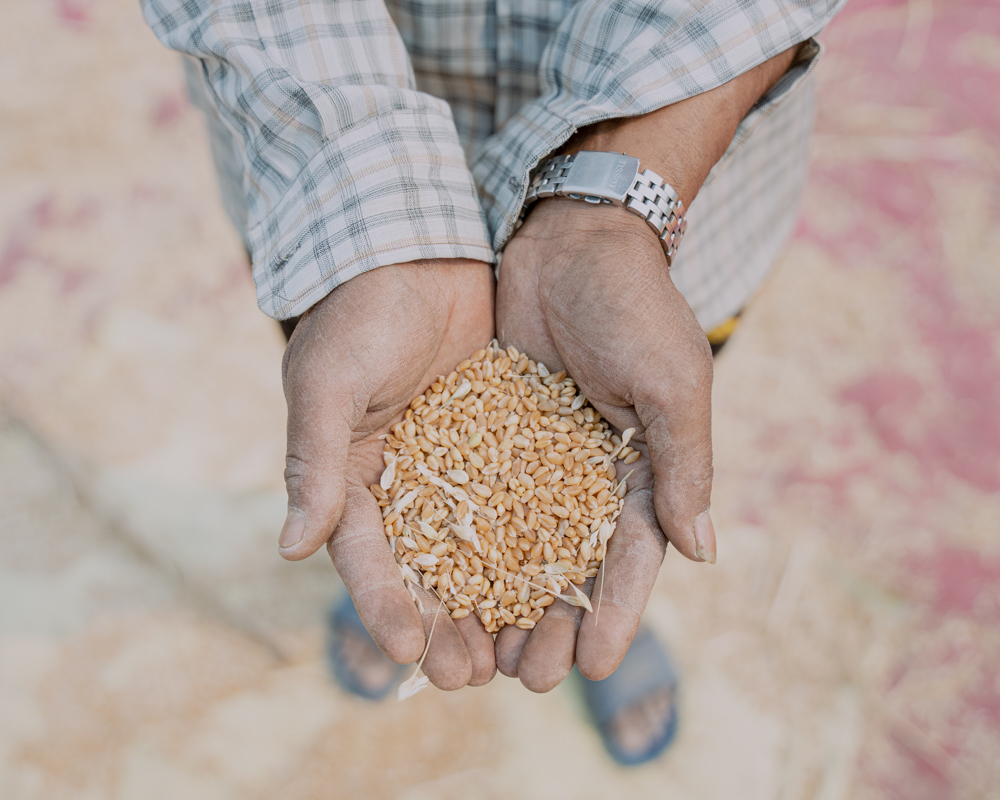
A farmer displays a handful of wheat he just harvested. He complains that due to the decreasing fertile land, which is disappearing rapidly because of urbanization, both the quality and quantity of wheat are declining. Amit Machamasi
Two kids wander around a pile of debris in Sipadol, Bhaktapur. The once-fertile lands of the area are gradually being converted for commercial purposes, such as housing. With rapid urbanization, many people are leaving agriculture behind and constructing houses on their land for a more accessible source of income. © Amit Machamasi
Light illuminates the raindrops as the first rainfall of the monsoon season begins in Sipadol, Bhaktapur. © Amit Machamasi
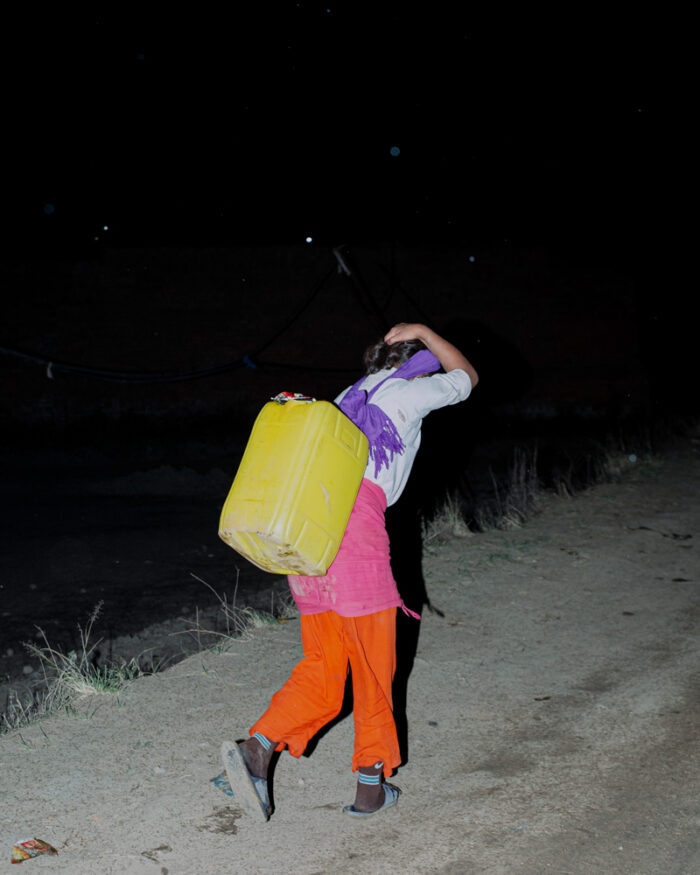
A young migrant worker, laboring tirelessly in a brick kiln, makes her way home with a jar of water balanced on her back. Due to the scarcity of drinking water, migrant workers often have to walk long distances or wait in line for their turn to fill their jars. They come here during the winter season to work for six months before returning home. © Amit Machamasi
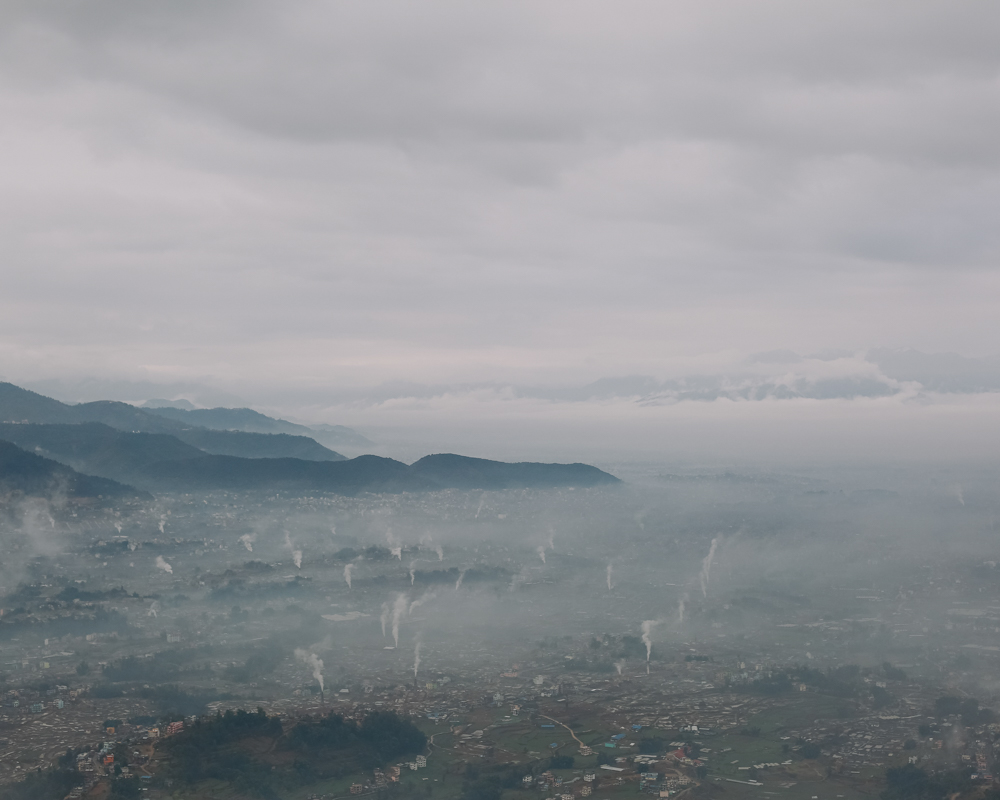
A top-down view of brick kilns around Bhaktapur, in operation since early morning. The outskirts of this ancient city are dominated by brick kilns, which continuously emit gasses and smoke, contributing to pollution in the surrounding atmosphere. © Amit Machamasi
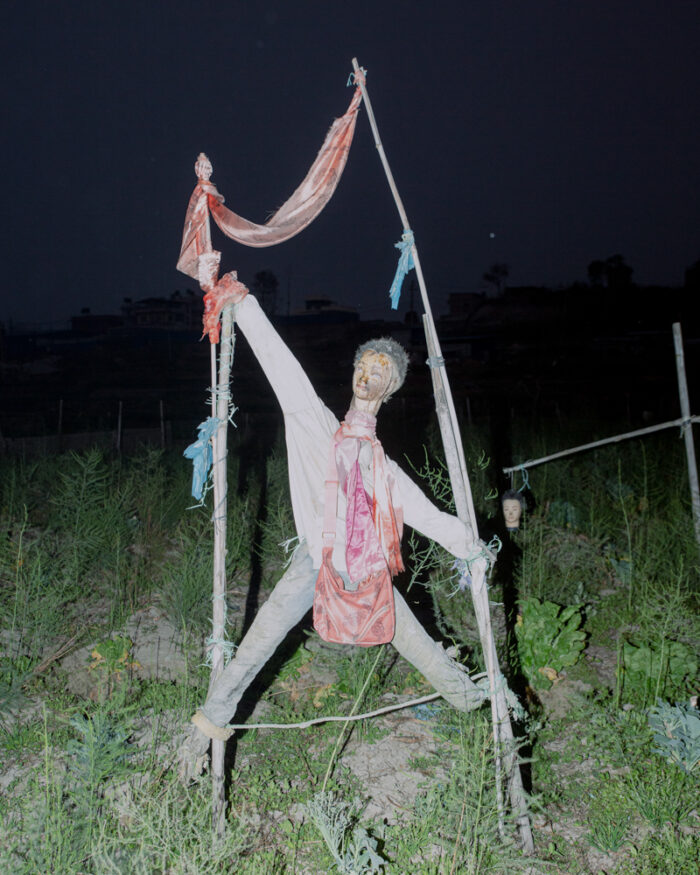
A puppet is set up in a field to scare away birds that come to feed on the crops. Throughout most of the field, these types of puppets are visible, effectively helping to protect the crops from being eaten by the birds. © Amit Machamasi
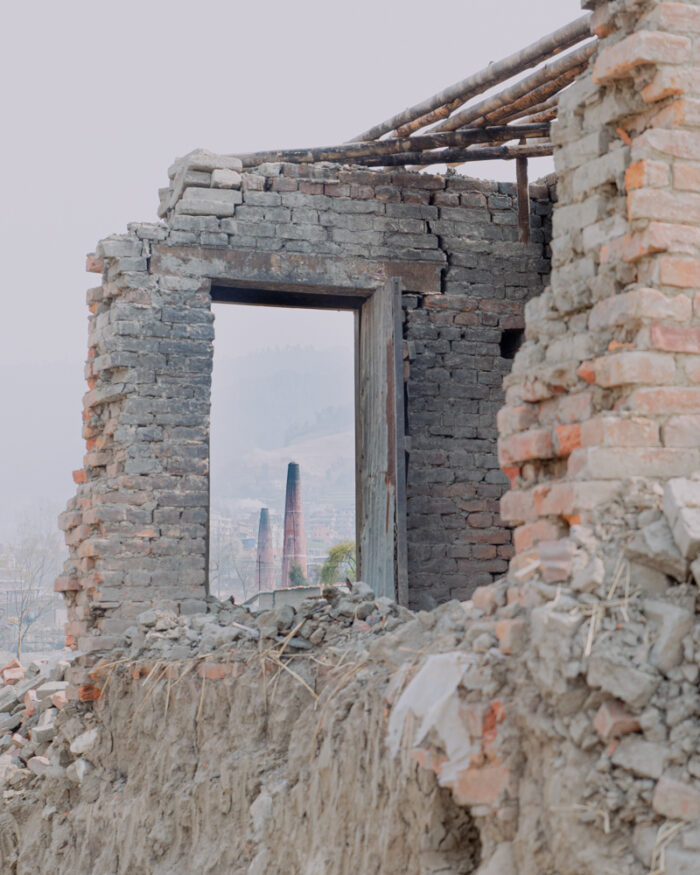
A view of a brick kiln from a dilapidated and abandoned farmhouse. © Amit Machamasi

Photographer: Amit Machamasi
Nationality: Nepali
Based in: Bhaktapur, Nepal
Website:  www.amitmachamasi.com/
Instagram: @amit_machamasi_

Amit Machamasi is a self-taught photographer from Bhaktapur with a deep passion for storytelling. His photography journey began in 2020 when he started working as a photojournalist. Since then, he has been capturing powerful moments through his lens.
Throughout his career, Amit has covered a wide range of events, exploring political issues, cultural intricacies, social matters, and documentaries. He has contributed to various well-known news portals in Nepal, including Pahilo Post, Nepali Times, and Ukaalo. His work has also gained recognition in international news outlets such as The Guardian, The Times UK, and The Wall Street Journal, among others.
Amit believes that a photograph can transcend boundaries and foster connections that bridge gaps between cultures, languages, and ideologies. He is currently working as a freelance photographer.