

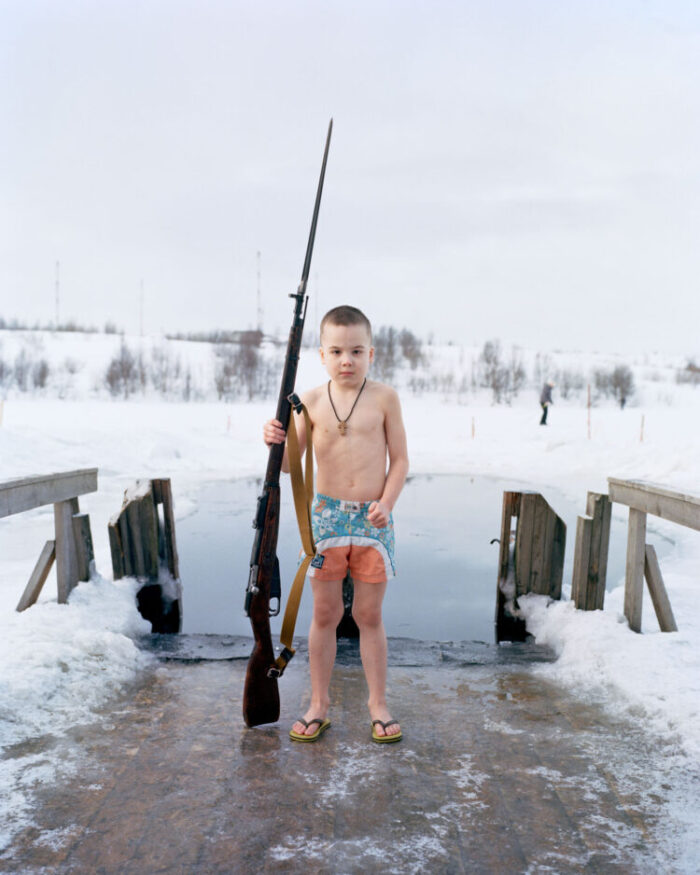
Kolsky, 2019 – 2024
Tanya Sharapova
2019 – 2024 — Kola Peninsula, Russia
About this series
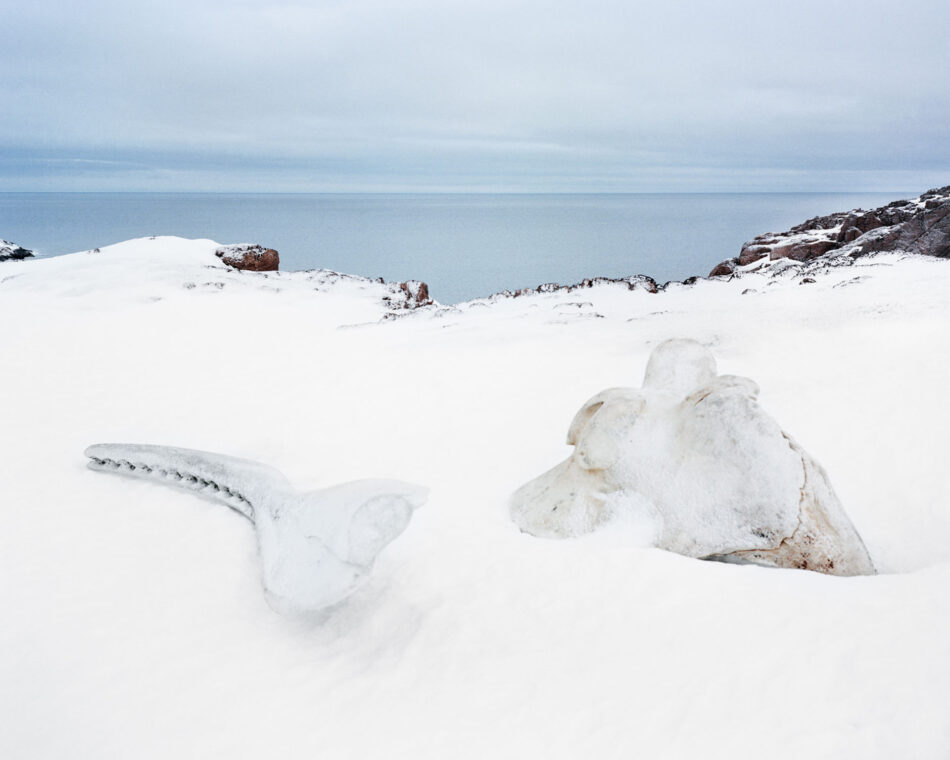
I was a passenger on a local bus driving through the middle of a blizzard when it slid off the road into a snowy ditch. Instead of calling for help, the driver announced: “Anyone who wants to reach their destination is welcome to get out and push the bus.” This became one of my first impressions of Kolsky, where I photographed for the following five years. At that time, Kolsky felt like the edge of the world. Russian travel agencies promoted it as a winter wonderland near the Arctic Circle, attracting tourists who came to chase the Northern Lights.
Kolsky, or the Kola Peninsula as it is formally known, borders the NATO countries, Finland and Norway and is home to Russia’s Northern Fleet – the central hub of nuclear submarines and related strategic infrastructure. For Russia, the region is not only militarily significant, but also a gateway to the Arctic, where fishing, oil, gas, and mineral extraction play a crucial role in the national economy. Since the Soviet era, nuclear submarines have been stationed here, taking advantage of ice-free access to the Atlantic.
At first, the daily rhythm of life seemed ordinary, almost untouched by the broader political climate. But the full-scale invasion of Ukraine in 2022 revealed a deeper reality.
It became clear how extensively militarism and authoritarianism had infiltrated everyday life: from patriotic slogans in classrooms to subtle forms of censorship in private conversations. The war also exposed how completely many Russians exist within a sealed information environment, with few alternatives to the official narrative. This system fosters passivity and misinformation, leaving many convinced that the so-called “special military operation” is justified and shaping a distorted understanding of the war and its consequences.
As the propaganda machine intensified, people became afraid of anything beyond
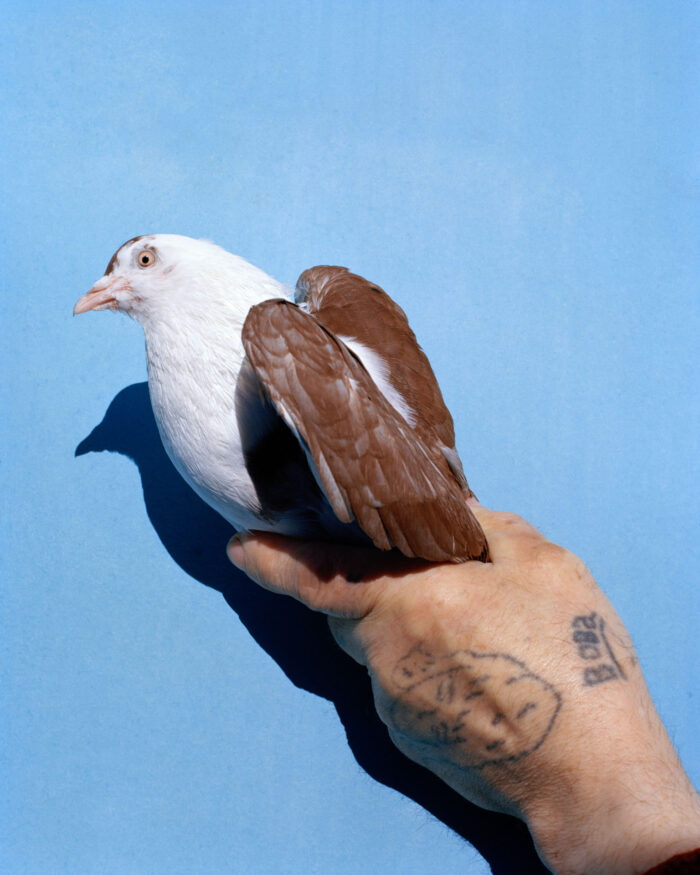
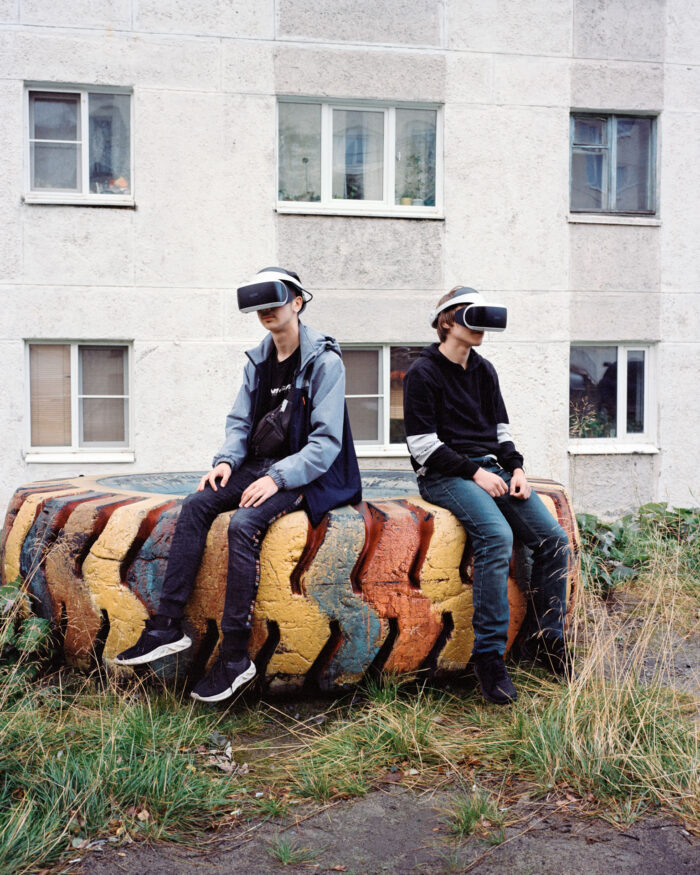
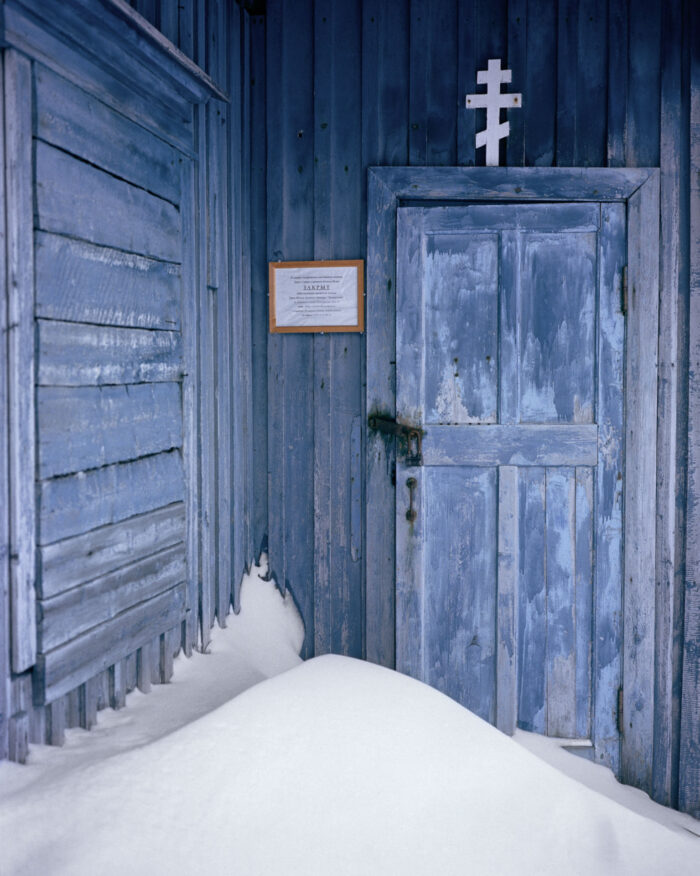
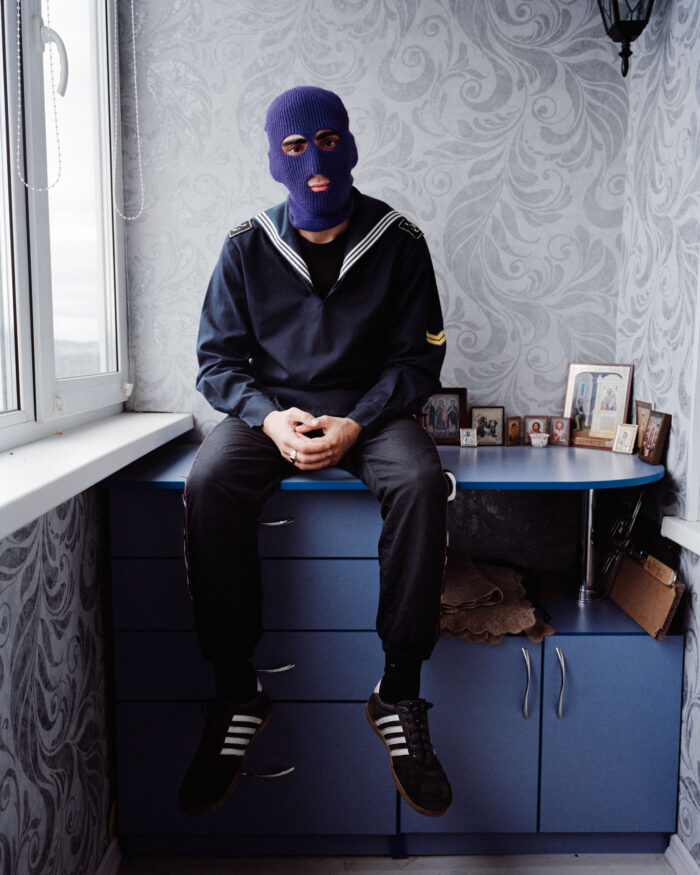
official rules and permissions. Those who once spoke to me freely refused to be photographed, saying only, “It’s better not to.” Others repeated television slogans. This documentary project attempts to capture this shift in mindset within Russian society, using the transformation of one region as a mirror. It explores how, through a combination of strategic propaganda, social pressure, and persuasive messaging, one of Russia’s deepest collective fears -“the main thing is to avoid war” – was reshaped into its opposite: a new national slogan, “We can do it again.”


Photographer: Tanya Sharapova
Nationality: Russian
Based in: Berlin, Germany
Website: www.tanyasharapova.com
Instagram: @tanya_sharap0va
Tanya Sharapova is a Russian-born documentary photographer and visual artist based in Berlin. Her work explores the relationship between individuals and political structures — belonging, displacement, collective memory, and life in contested or transitional spaces, particularly in post-Soviet and European contexts. Drawing on archival materials and personal research alongside photography, she examines how historical rupture and political change shape everyday life.
She has a background in publishing and photo editing, and worked as a travel photographer and writer for publications including National Geographic Russia and Condé Nast Traveler Russia.
From 2021 to 2024, she studied at the Ostkreuz School of Photography in Berlin in Irina Ruppert’s class, graduating with her long-term documentary project Kolsky, supported by VG Bild-Kunst / Kulturwerk Foundation and Innovate Grants.