
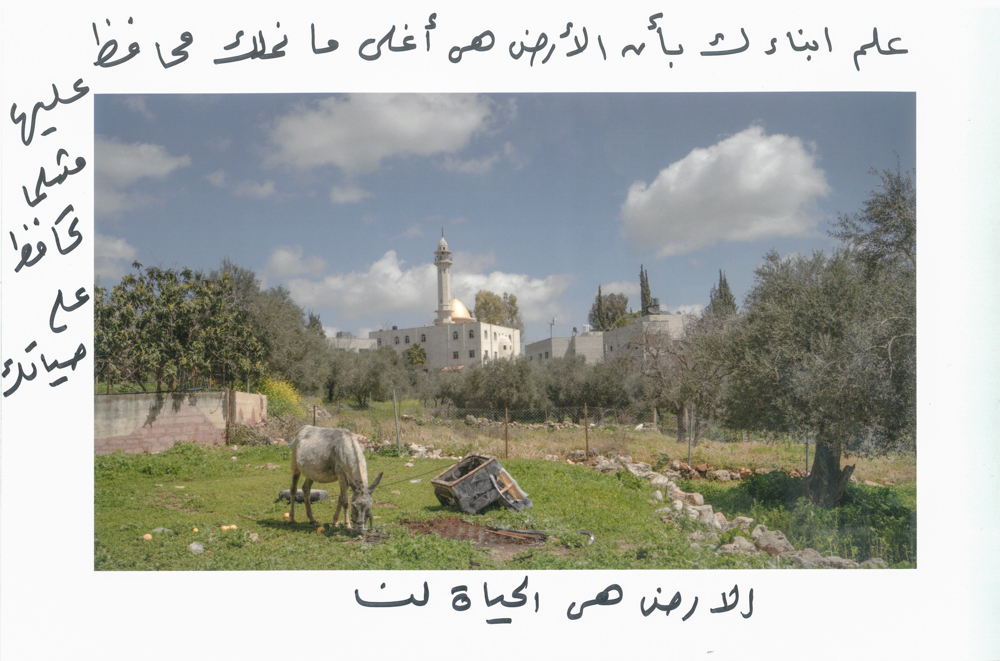
"I will teach my children that the land is the most precious thing we have. I will stay and live in my land despite the plot of the occupier Palestine is my paradise, my life and my future. I am from here and this is my grandfather's land," Ibrahim wrote around his portrait. A resident of Wadi Fukin for generations, he has been helping farmers throughout the West Bank. Wadi Fukin, occupied West Bank, 27 March 2022. © Victorine Alisse / Collective Hors Format

We will stay here as long as there will be thyme and olives

Victorine Alisse / Collective Hors Format

2022— Wadi Fukin, Palestine

About this series

Not far from Bethlehem, nestled in a valley, the Palestinian village of Wadi Fukin, with a population of 1,400, is literally surrounded by two Israeli settlements. The ongoing expansion of these settlements and their infrastructure poses an increasing threat to the village’s land. Since 2022, during several visits, I have shared in the daily lives of the village’s farmers and habitants and photographed them at work. Some of them chose one or more photos and wrote down their thoughts and feelings. What they all have in common is a deep-seated attachment to their land and their village. I hope to reveal, through this series “We Will Stay Here as Long as There Is Thyme and Olives,” the hidden realities of the land grabs and evictions carried out by Israel for decades, as well as the resilience and self-sacrifice of the farmers of Wadi Fukin who, despite an increasingly precarious situation, continue to resist in silence.
For without the land, there is no possible future.
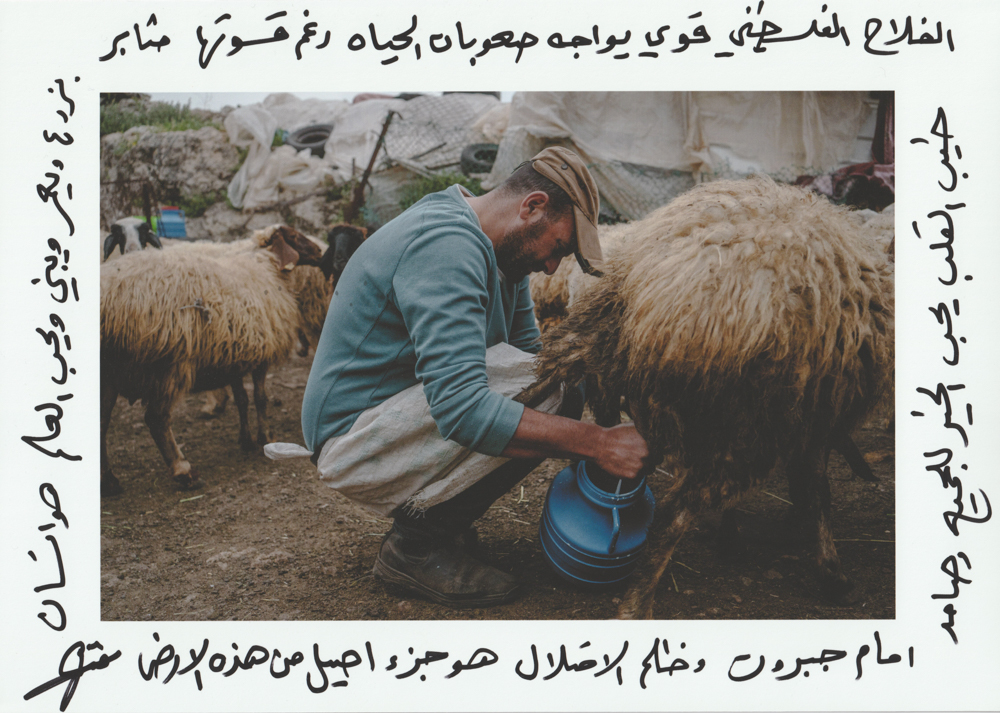
“The Palestinian farmer is strong and resilient, facing life’s trials with determination. He is hardworking. He plants, builds, and cares for the land. He values education and has a generous heart, always wishing others well. In the face of the oppression and injustice of the occupation, he remains steadfast. He is an essential part of this land,” wrote a villager. Wadi Fukin, Occupied West Bank, April 2025. © Victorine Alisse / Collective Hors Format
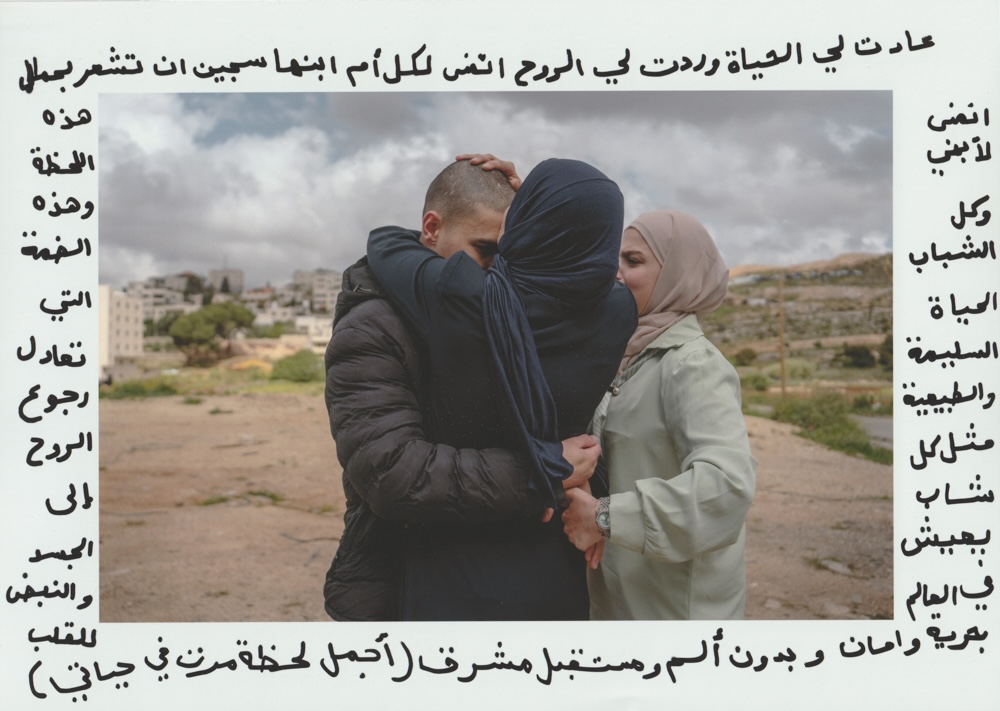
“I felt as though life was returning to me, as if my soul had come back. I wish every mother whose son is unjustly imprisoned could experience the beauty of that moment—a moment like a heartbeat returning to a lifeless body. I wish for him, and for all young people, a normal life filled with freedom, security, and freedom from pain, and a bright future. It was the most beautiful moment I have ever experienced,” wrote the mother whose son was released by the Israeli army after a year in prison. Ramallah, West Bank, April 2025. © Victorine Alisse / Collective Hors Format
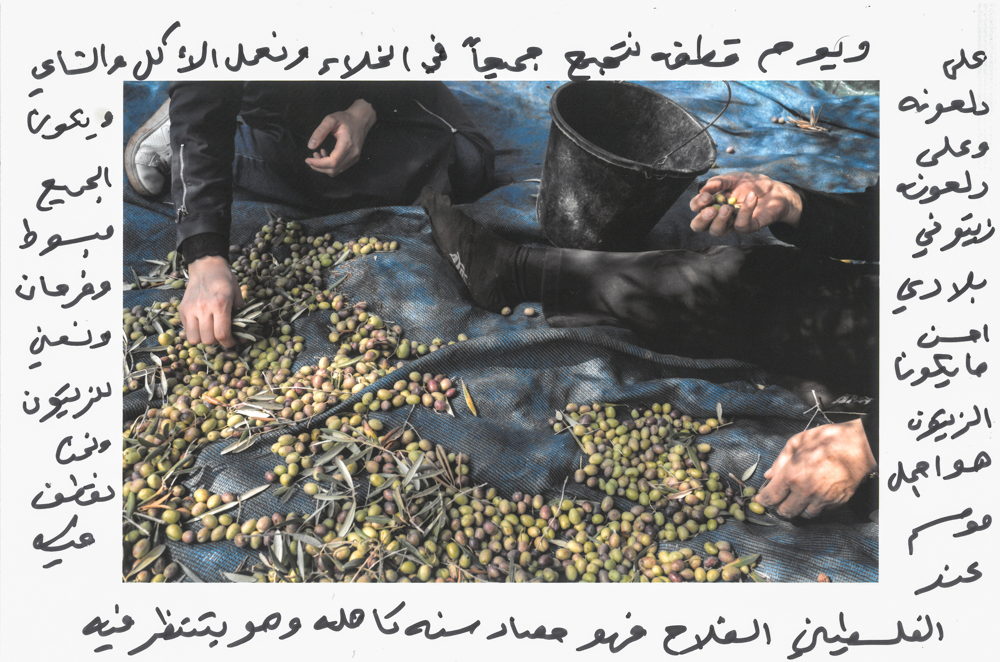
"Ala Dalona and Ala Dalona, the olives of my country are the best" (this phrase is taken from a traditional Palestinian song). The olive picking season is the most beautiful season for the Palestinian farmer, it is the harvest of a whole year of waiting. We gather on the day of the harvest in the wilderness, we make food and tea. Everyone is happy, we sing for the olives as we pick them," wrote a female farmer from Wadi Fukin, occupied West Bank, on 27 October 2022. © Victorine Alisse / Collective Hors Format
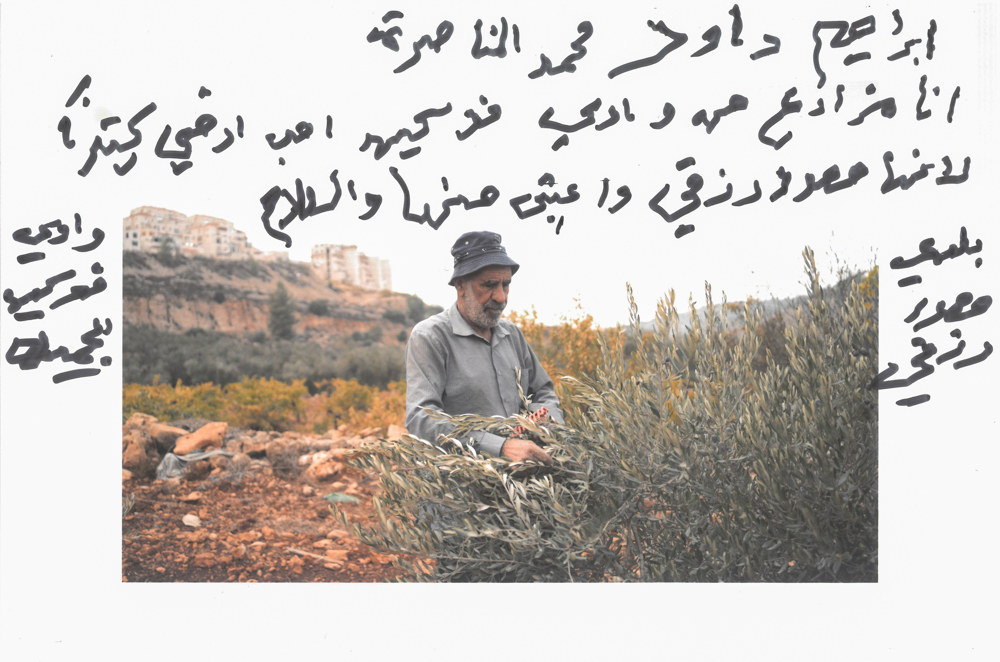
"I am a farmer from Wadi Fukin, I love my land very much because it is the source of my livelihood (...)-the beautiful Wadi Fukin," wrote Ibraheem Dawood Mohammad Manasra, a resident of Wadi Fukin. He is part of the first generation in Wadi Fukin who could no longer live as a farmer. He was forced to drive a cement truck to the settlement of Beitar Illit to support his family. Cheap Israeli products flooded the Palestinian markets, bankrupting farmers and forcing them to work in the construction sector or on Israeli farms. Wadi Fukin, occupied West Bank, 23 October 2022. © Victorine Alisse / Collective Hors Format
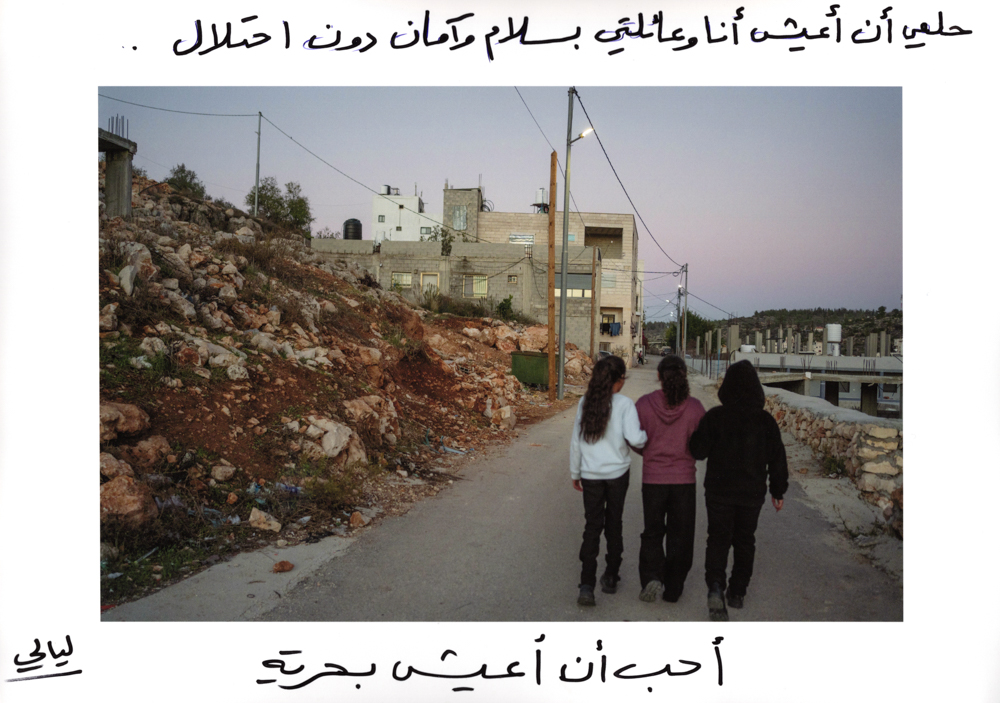
“My dream is to live in peace and safety with my family, free from occupation. I want to live with dignity and true freedom.” Wadi Fukin, November 2025. © Victorine Alisse / Collective Hors Format
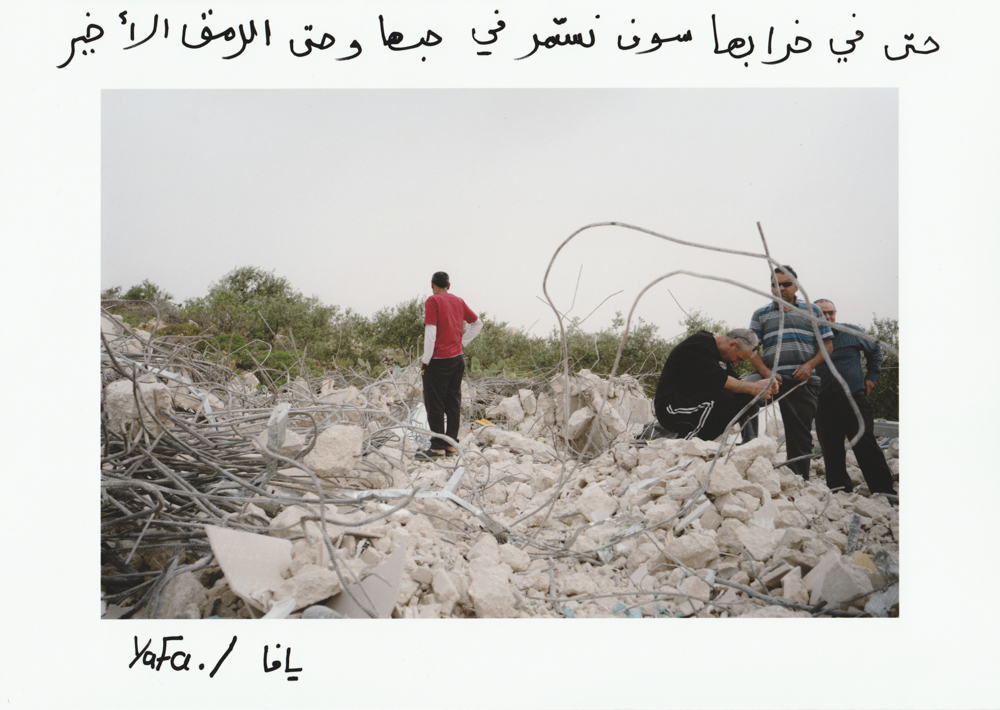
“Even in its ruins, we will continue to love this land until our last breath,” writes Yaffa, a student and resident of Wadi Fukin. April 2025 © Victorine Alisse / Collective Hors Format
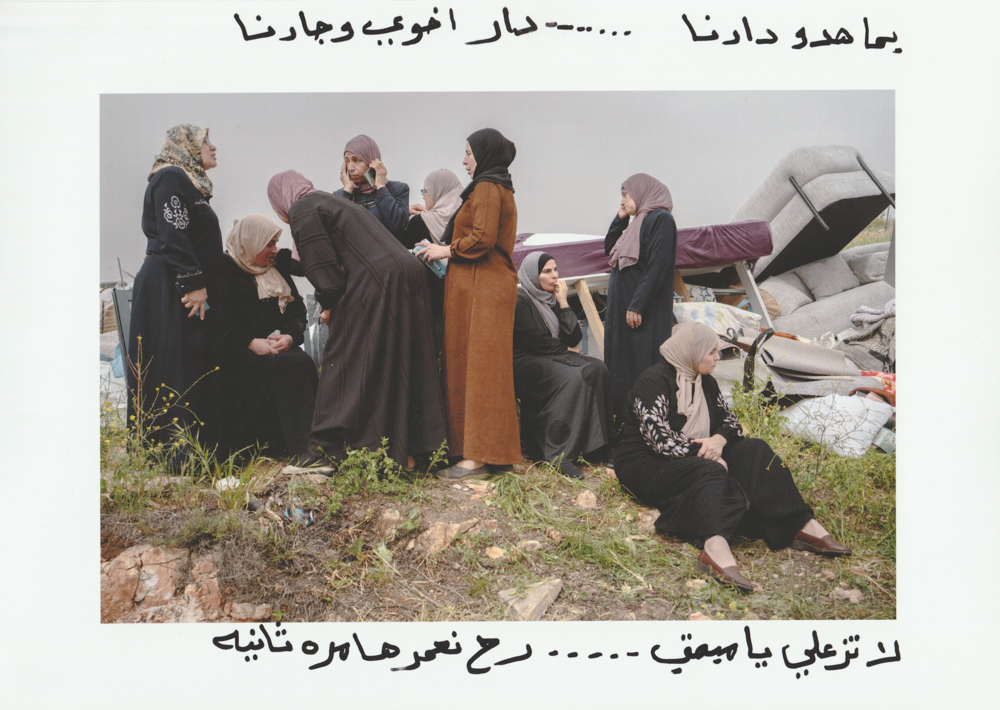
“Since they destroyed our house… my brother’s house and our neighbor’s… Don’t be sad, Mom… we’ll rebuild it again,” wrote the son to his mother, whose house had been destroyed by the Israeli army. Wadi Fukin, Occupied West Bank, April 2025. © Victorine Alisse / Collective Hors Format
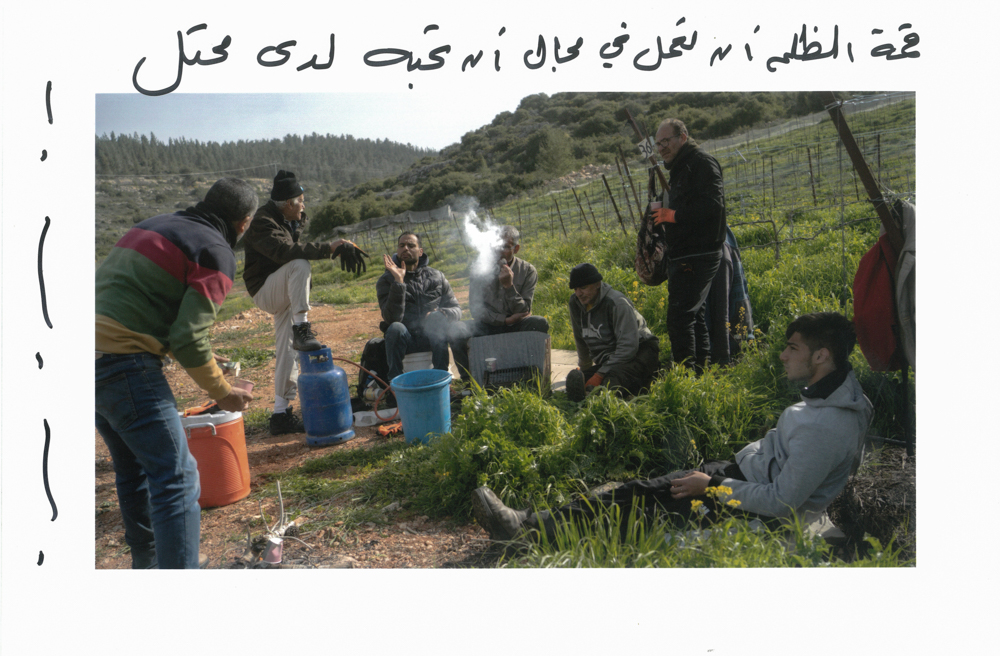
The height of injustice is to work in a field you love (agriculture), for the occupier," wrote one of the Palestinian workers on an Israeli farm. Mata, Israel, 29 March 2022. © Victorine Alisse / Collective Hors Format
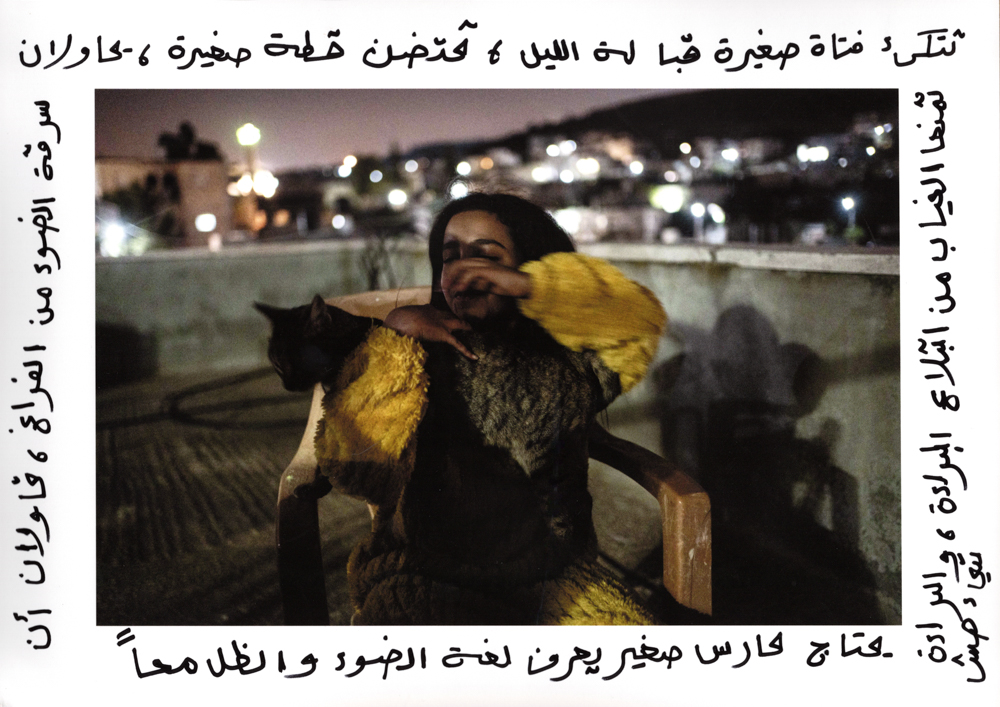
“A little girl leans out into the night, holding a tiny kitten close to her. Together, they wrest light from the void, trying to prevent absence from swallowing innocence, so fragile that it needs a little guardian, one who speaks the secret language of shadow and light,” Wadi Fukin, November 2025. © Victorine Alisse / Collective Hors Format
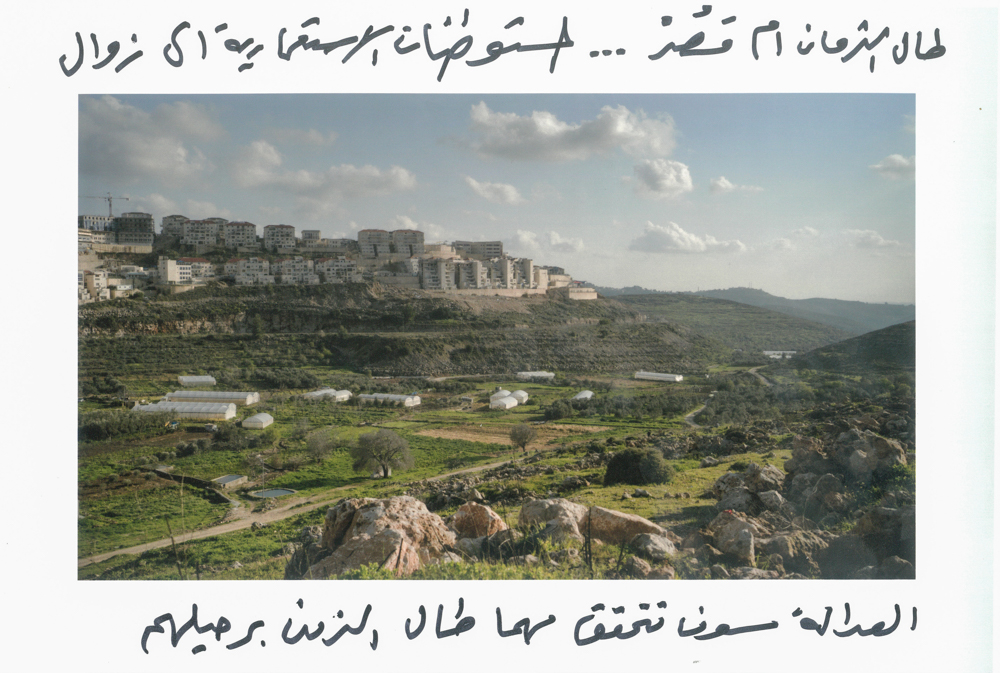
"In the immediate or long term, Israeli settlements will disappear. And justice will take place, no matter how long it takes," wrote a farmer on this landscape showing the village of Wadi Fukin in the foreground with the settlement of Beitar Illit in the background. Wadi Fukin, 26 March 2022. © Victorine Alisse / Collective Hors Format

Photographer: Victorine Alisse / Colelctive Hors Format
Nationality: French
Based in: Saint Jean de Luz, France
Website:  victorine-alisse.format.com
Instagram: @victorine_alisse_

The granddaughter of a farmer, Victorine has been working on a documentary project for the past five years exploring the disappearance of rural life, with the first part set in France and the second in Palestine/Israel.
Her documentary approach leads her to address social and environmental issues; above all, it is her encounters with others that inspire her photographic work. She is interested in new narrative forms, particularly those that combine text and images. In 2021, the series “Au grand air” , co-directed with JS Saia, was awarded the Caritas Social Photography Prize. In 2022, she received the Bourse du Talent. In 2023, she received the Redpoll Trophy New Artist Award in China for her series “We Will Remain Here as Long as There Is Thyme and Olives”, created in collaboration with Palestinian farmers from the village of Wadi Fukin.Her work has been exhibited in France and abroad.
Initially rooted in documentary photography, her approach has also shifted toward a more
artistic form where the image becomes a space for introspection and contemplation, as seen in the series “J’irai me noyer dans ce bleu.”
A member of the Collectif Hors Format, she works with the press. At the same time, Victorine pursues creative work through residencies with art centers such as Diaphane and cultural institutions such as Les Champs Libres.