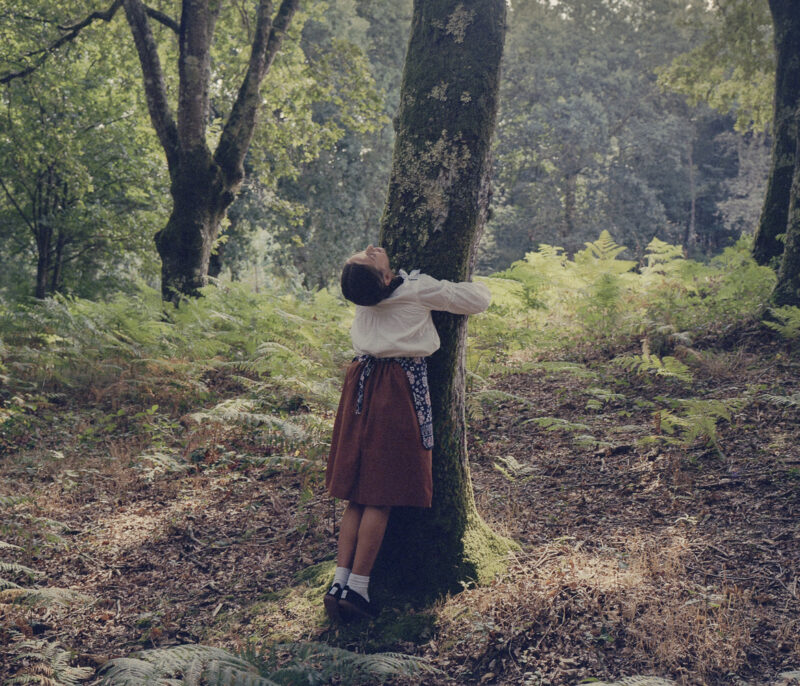

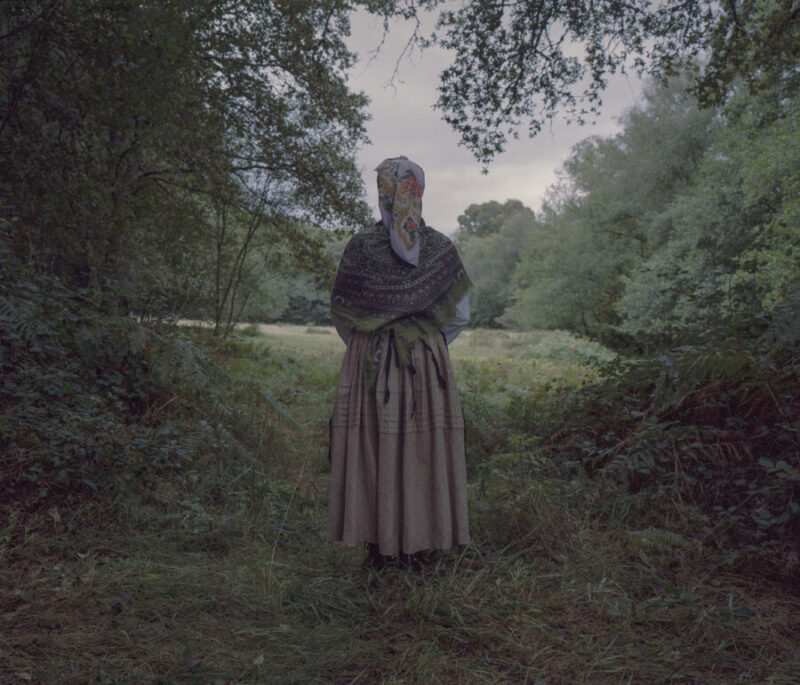
Nestled in the lush landscapes of Galicia, a woman dressed in traditional Galician attire poses before a meadow at the edge of a wooded enclave. The vegetation, a testament to Galicia’s historical abundance of rainfall, unfolds before her. The essence of Galicia’s enduring green legacy, shaped by the perennial rains that have blessed the region, is embodied in the silhouette of this woman, in a connection with nature that characterizes the people of Galicia. September 3th, 2023. Curbián, Galicia. © Carlos Folgoso Sueiro

Beyond the Lake

Carlos Folgoso Sueiro

2024 — Spain

About this series

Tony spoke of Rosemary, who existed only in his dreams. Adolf and Raúl’s house was burned while they were inside, over land disputes. María emigrated, leaving her son Emilio behind—he later died from alcoholism. In Sabucedo, wild horses lose space as ancestral lands vanish. Aceredo disappeared underwater in 1992, closing a chapter of Galician life. These stories echo through rural Galicia and its border with Portugal, where myth and memory shape a landscape marked by absence and endurance.
Galicia now faces rural depopulation, land abandonment, and climate extremes. Droughts dry out reservoirs, eucalyptus monocultures spread, and industrial projects deepen the rift between short-term profit and long-term survival. 
Beyond the Lake is both documentary and personal. I’m the son of a father lost to alcoholism, and the grandchild of emigrants—three of them left Galicia, and I spent 16 years abroad. The images are rooted in the spaces of my childhood, tracing the weight of generational exile, silence, and resilience.
This project is a metaphorical journey into the soul of Galicia. It constructs a visual narrative shaped by cinematic atmosphere and lived memory. Galicia is a land of tension—sorrow and strength, legend and reality, devotion and neglect. Through photography, Beyond the Lake captures a fragile equilibrium, where resilience and nostalgia intertwine, and the land becomes a mirror of a people’s ongoing fight not to disappear.
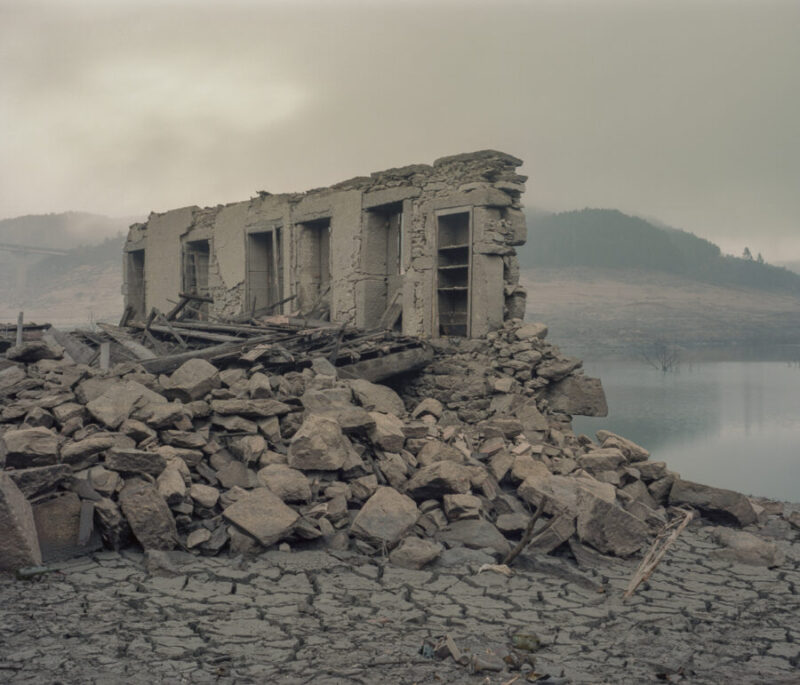
A few kilometers from my father's village, it was decided to put locks on a river and turn it into a reservoir, in the 90s. This caused many villages to be buried under water and their inhabitants had to go to earn a living in other places, causing the emigration problem to continue to become increasingly endemic in the area. The remains of the demolished appearance of an abandoned house in one of those villages recalls the oblivion in which the entire area has been left. Near the town of Aceredo, a decision was made in the 90s to dam a river and create a reservoir. This led to the submersion of several villages, forcing their inhabitants to seek livelihoods elsewhere, exacerbating the persistent issue of emigration in Galicia. The remnants of a demolished house in one of these villages serve as a haunting reminder of the neglect that has befallen the entire region. December 13th, 2021. Aceredo, Galicia. © Carlos Folgoso Sueiro
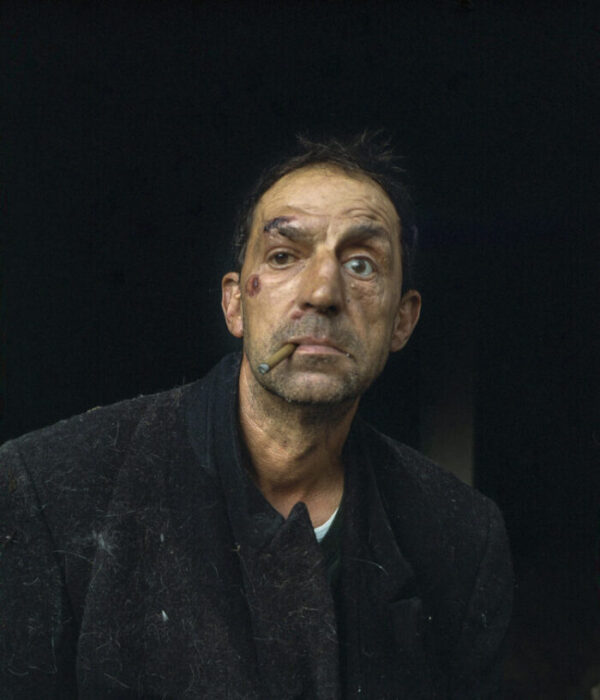
Tony used to arrive home with nuts, claiming that his girlfriend, Rosemary, had given them to him. However, Rosemary only existed in his mind. Tony resides in Atas, a small remote village on the border between Galicia and Portugal. He grew up with alcoholic parents and, unfortunately, became an alcoholic himself. Tony says, "I remember that when I was a child my father would put a glass of wine on the table for me and tell me 'Drink! A little bit won't hurt you". When Tony drinks alcohol he quickly loses control over himself to the point of losing an eye due to a car accident while driving drunk. He currently lost his job due to his alcoholism and lives on state aid and his family's charity. The depression in the area, the lack of job opportunities, and the communication difficulties made it even more challenging for him to overcome his alcoholism. April, 7th. 2023. Atás, Galicia. © Carlos Folgoso Sueiro
Sabela, a young Galician girl, plays in the forests of Palas de Rey, hugging a tree—a gesture that embodies the deep communion of the Galician people with their natural environment. This forest, brimming with life and stories, starkly contrasts with the plans of the Portuguese company Altri, which aims to build a cellulose plant nearby. The factory is projected to consume 46 million liters of water per day and will promote the expansion of eucalyptus monocultures, an invasive species threatening to replace the biodiversity of these woods. The contrast between Sabela’s symbolic connection to nature and the aggressiveness of an industrial model like Altri’s reflects the environmental and social dilemmas Galicia faces today. September 30th, 2024. © Carlos Folgoso Sueiro
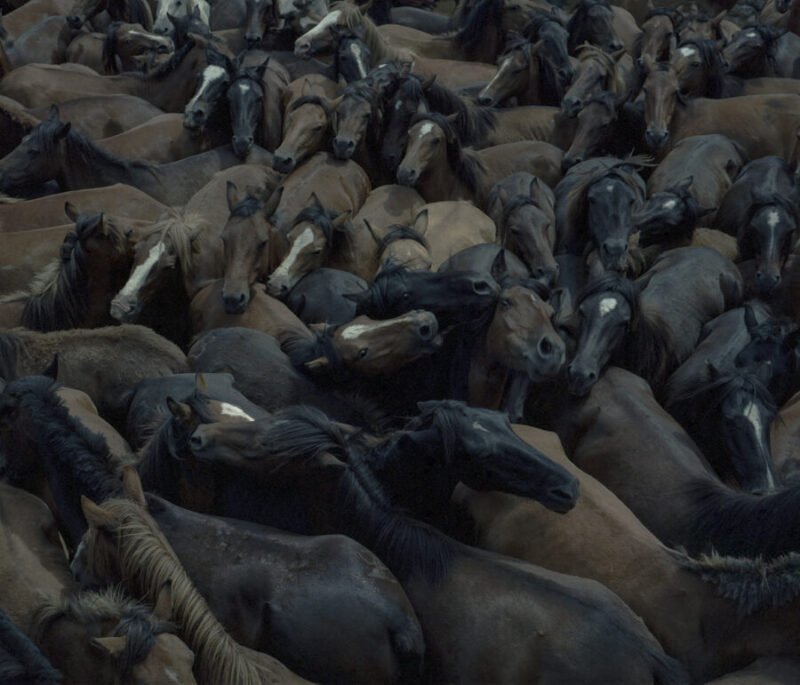
The Galician wild horse, also known as “Besta” constitutes a unique cultural legacy with a great connection with the history of Galicia, its rural landscape, and its natural values. In the last half-century, the population of this animal has been reduced by half. Factors such as the abandonment of rural areas, deforestation due to fires, or the replanting of invasive species are leading to the collapse of the Wild Horse population, so much so that its population has been reduced from 22,000 to less than 10,000 heads in the past 50 years, according to a doctoral thesis from the University of La Coruña. These animals contribute to addressing some of the problems derived from the climate emergency, the depopulation of rural areas, and the biodiversity crisis. Although this colony of ‘Bestas’ remains the largest in Europe, it is at serious risk of disappearance, according to studies from the University of La Coruña. July 8th, 2023. Sabucedo, Galicia. © Carlos Folgoso Sueiro
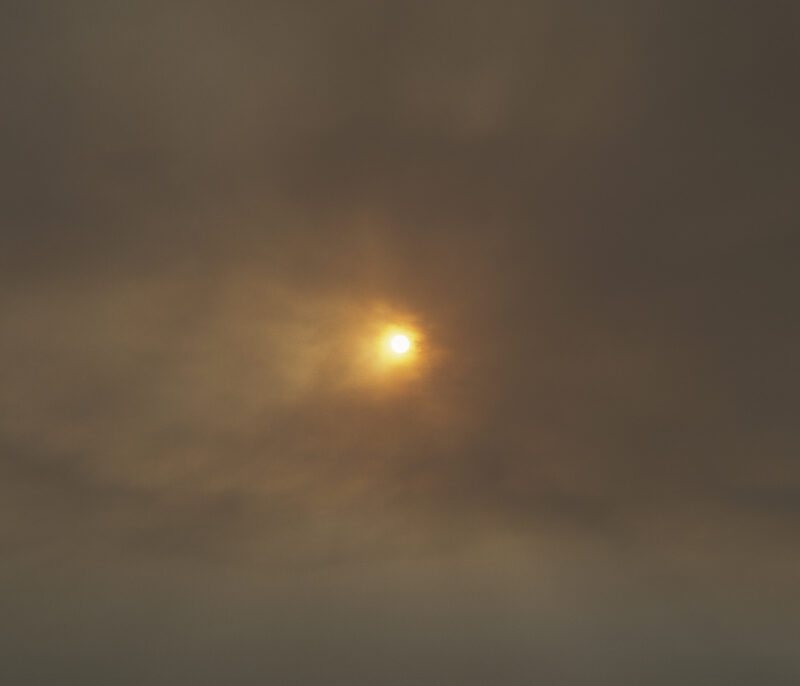
Sun obscured by a cloud of smoke from a forest fire. The region of Galicia experiences a devastating number of wildfires, contributing to 80% of forest fires in Spain. 2021 set a record with over 9,000 registered fires, consuming more than 35,000 hectares of land. These disasters not only wreak havoc on biodiversity but also have adverse consequences on air quality and the health of local communities. November 19th, 2022. Atas, Galicia. © Carlos Folgoso Sueiro
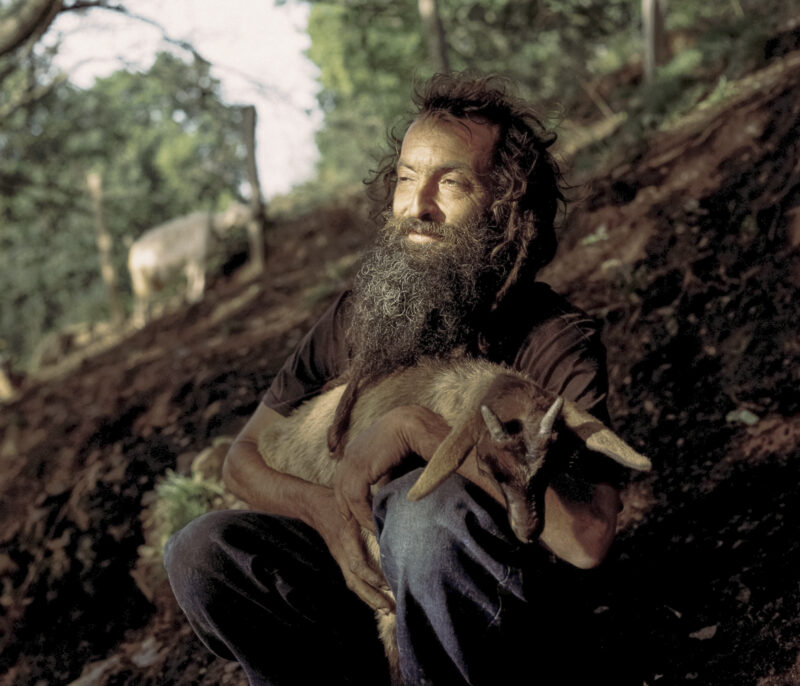
Nacho is 40 years old and originally from Zaragoza, a city almost 1,000 kilometers away from Galicia. After a turbulent youth, he decided to isolate himself in the Galician mountains to live a life less dependent on society. Today, he cares for his herd of goats, with whom he shares a very special bond: he hugs them, talks to them, and cares for them as if they were his children. Every morning, he takes them to the mountains early so they can graze, and he doesn’t return home until nightfall. In these animals, he seems to have found the meaning of his existence. Nacho lives in an old, occupied stone house without electricity. His diet consists of vegetables and the milk his goats produce. As he himself says, his dream would be to eat like the goats, feeding on the herbs of the mountains. Nacho leads a hermit-like life, finding in this self-imposed exclusion from normalized society a true sense of freedom. May 24th, 2024. VIlar, Galicia. © Carlos Folgoso Sueiro
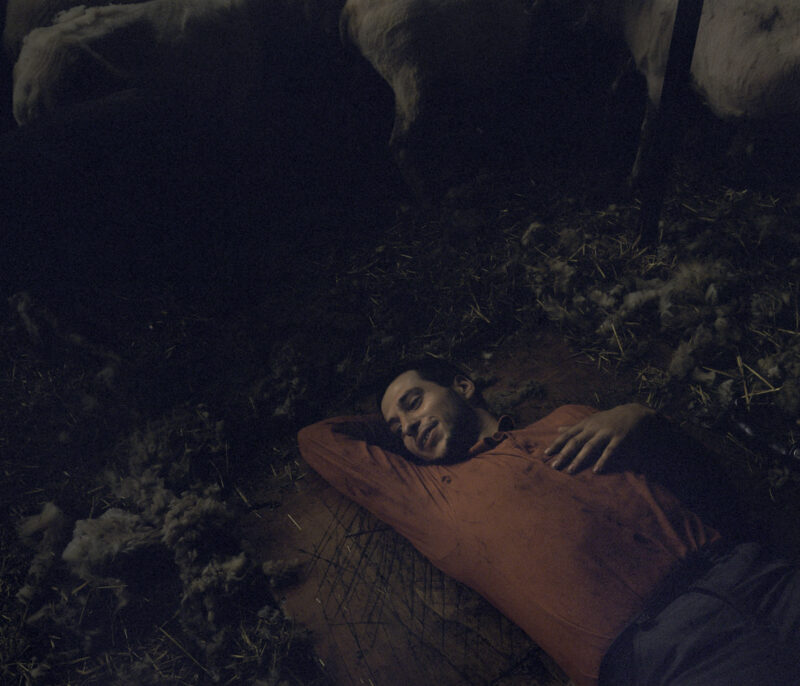
Teixo is a young man of just 20 years. He grew up in the mountains of Negueira de Muñiz, in a house without electricity. Teixo’s father works shearing goats and sheep, and since he was little, Teixo never showed much interest in studying. That’s why, as soon as he turned 15, he started shearing goats alongside his father. Now, at 20 years old, he is certain that his work will always be shearing goats. Although it is a very tough job, Teixo enjoys it because it helps him maintain a connection with the animals and strengthens his bond with the land and nature, a bond he’s had since childhood. May 7th, 2024. Cualedro, Galicia. © Carlos Folgoso Sueiro
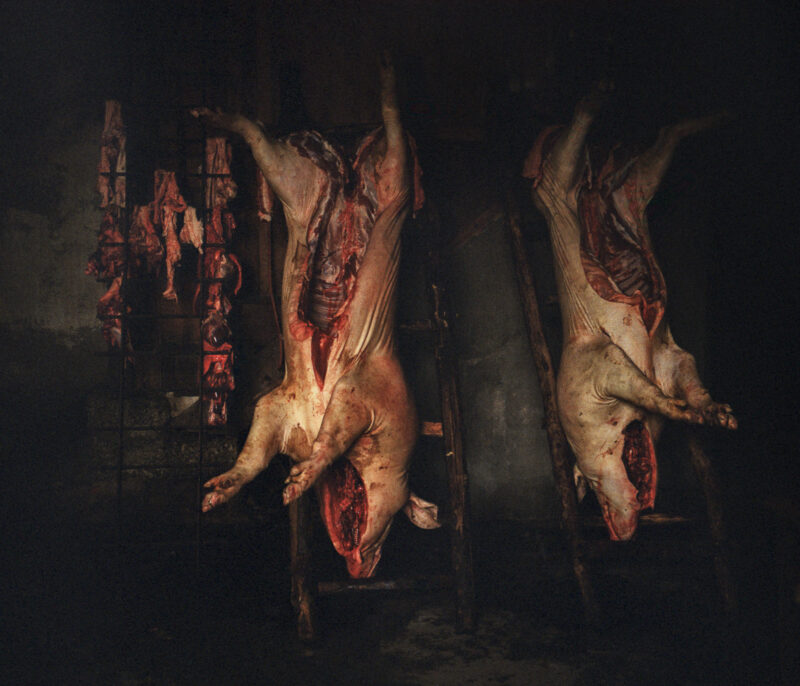
The 'matanza do porco' is an ingrained tradition in Galicia, where rural families used to slaughter pigs to obtain essential meat products. Although historically a vital subsistence practice in rural life, it is currently prohibited due to health and animal welfare regulations. This process not only provided food for the entire year but also served as a social event that brought the community together. Despite its prohibition, some locals still maintain the practice in a more limited and clandestine manner, thus preserving a part of Galicia's rich cultural heritage. January, 10th, 2024. Atás, Galicia. © Carlos Folgoso Sueiro
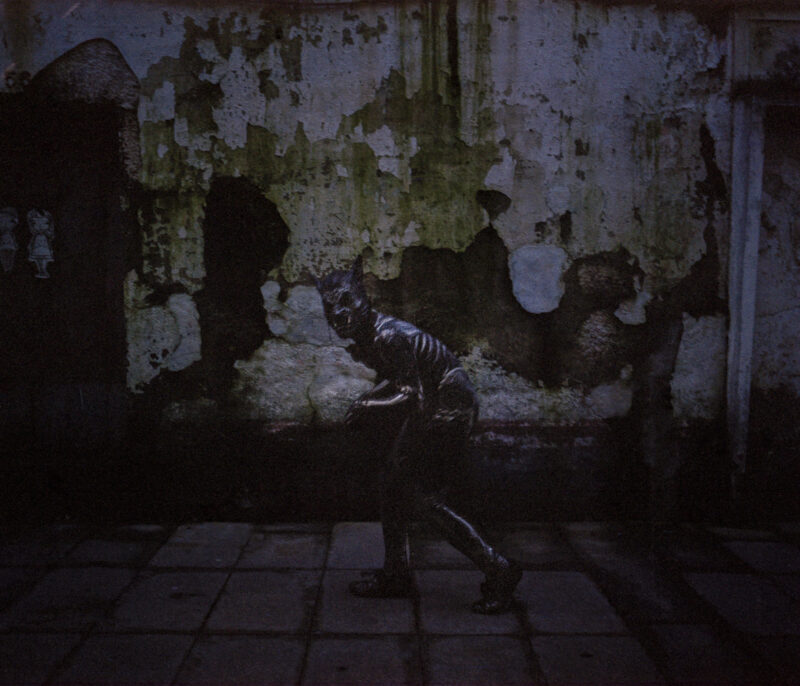
Beliefs in the supernatural intertwine with the everyday reality of rural life on the border between Galicia and Portugal. The celebration of Montalegre's 'Sesta 13,' with its myths and legends, delves into the ancestral roots of witches and monsters in rural Galicia. This place is imbued with stories that weave into the rich Galician mythology, where witches conducted rituals and mysterious creatures were said to inhabit the shadows. The connection with concepts of life after death manifests in the atmosphere of this celebration, suggesting the idea of a threshold between the world of the living and the realm of the unknown. Rural Galicia, with its solitary landscapes and dense forests, becomes a fitting backdrop for these narratives that explore the boundaries between life and death. January 13th, 2023. Montalegre, Portugal. © Carlos Folgoso Sueiro
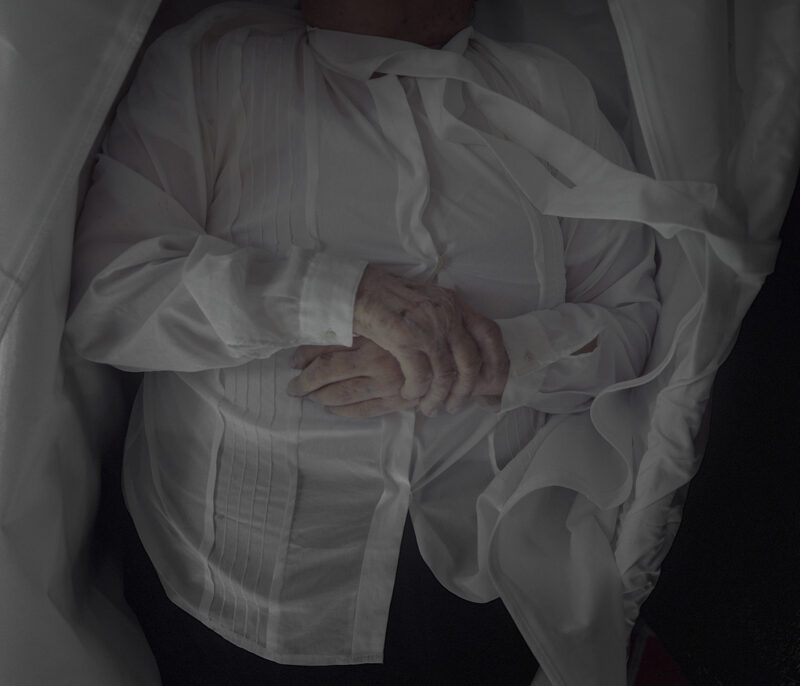
Maria, a native of a village called Atás, was born in 1929 and had her only son, Emilio, when she was 26 years old. Maria married when she was already pregnant, a situation frowned upon in rural Galicia at that time. The poverty of her home area and the lack of opportunities led Maria to emigrate to Hanover, Germany, leaving Emilio in his village. She believed that working abroad would provide him with the financial stability he needed to live comfortably. Emilio was raised in the home of his uncles (Maria’s brothers), who were alcoholics. This environment eventually led Emilio to develop alcoholism as well. Emilio started his own family, but his struggles with alcohol never ceased, ultimately leading to his death at just 50 years old, shortly after Maria permanently returned from Germany. Maria separated from her son, thinking she was giving him the best by working abroad, yet her decision made him feel like an abandoned child. Emilio grew up feeling lost in the world, believing that his parents had abandoned him because they did not love him, and he was further stigmatized for being the product of a premarital conception. When Maria finally returned to enjoy her time with her son, he passed away due to his alcoholism. June 16th, 2022. Atás, Galicia. © Carlos Folgoso Sueiro
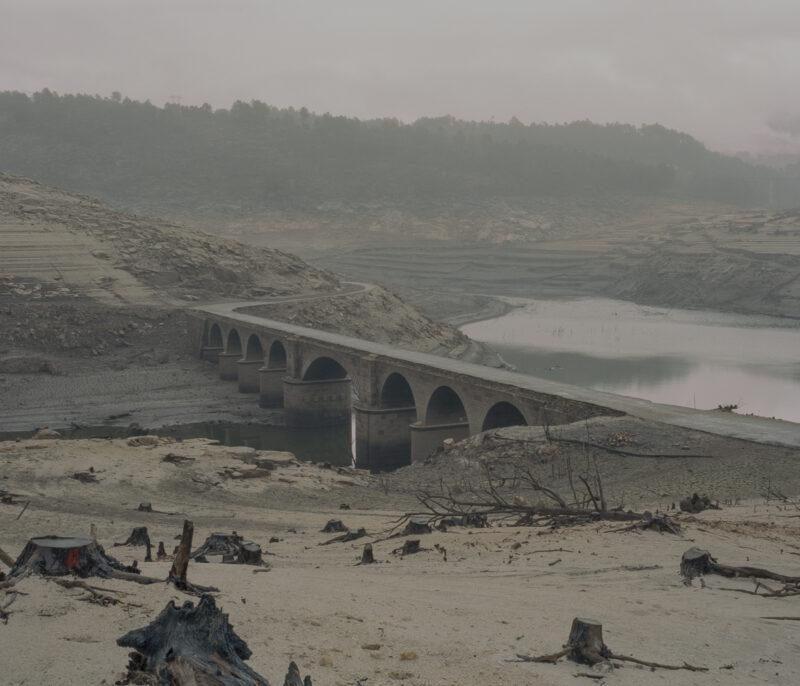
A few kilometers from my father's village, it was decided to put locks on a river and turn it into a reservoir, in the 90s. This caused many villages to be buried under water and their inhabitants had to go to earn a living in other places, causing the emigration problem to continue to become increasingly endemic in the area. The remains of the demolished appearance of an abandoned house in one of those villages recalls the oblivion in which the entire area has been left. Near the town of Aceredo, a decision was made in the 90s to dam a river and create a reservoir. This led to the submersion of several villages, forcing their inhabitants to seek livelihoods elsewhere, exacerbating the persistent issue of emigration in Galicia. The remnants of a demolished house in one of these villages serve as a haunting reminder of the neglect that has befallen the entire region. Among the ruins, the remains of a nearly wrecked bridge in Aceredo evoke the Christian idea of the “Bridge to Hell,” a metaphorical path separating life from death and symbolizing choices leading to disastrous consequences. Galicia, a land of mysticism and folklore, is deeply tied to legends of witches, spirits, and sacred rituals, blending pagan traditions with Christian spirituality. This intersection of mysticism and religion shapes the Galician identity, deeply rooted in ancestral narratives and spiritual symbolism. December 13th, 2021. Aceredo, Galicia. © Carlos Folgoso Sueiro
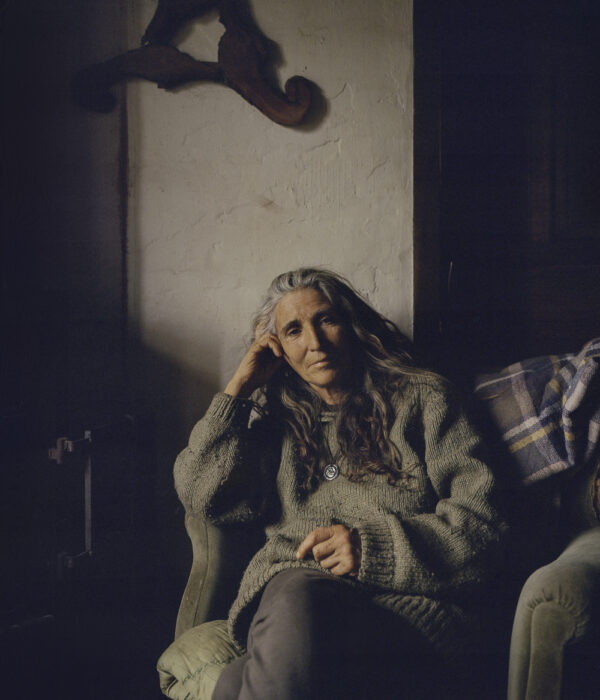
Guillermina, who comes from a wealthy family in the city of Lugo, one day in her youth decided to break away from her city and move to live in the mountains of Vilauxín, an abandoned village that can only be reached by walking for more than half an hour. Guillermina lived her youth in these mountains in a “hippie commune”, raising 4 sons and daughters by 3 different men, whom she gave birth to in her own home, without a doctor or hospital facilities. Guillermina currently lives in Escanlar, one of the most remote villages in the Galician mountains, where the road ends and which is cut off for periods of the year because snowfall or heavy rain ruins the roads. She is disconnected from the problems of the world, as she does not watch television or listen to the radio. She spends her days cutting wood, preparing the garden and walking through the woods. Two of her children have moved to the city, while two others live in villages nearby. May, 16th, 2024. Ernes, Galicia. © Carlos Folgoso Sueiro

Photographer: Carlos Folgoso Sueiro
Nationality: Spanish
Based in: Spain
Website:  www.carlosfolgoso.com
Instagram: @carlosfolgososueiro

Born on October 28, 1982, in Verín, Galicia (Spain), I am a photographer and a Sociology student. I use photography to understand the world and myself, often exploring human emotion. I’m also passionate about geography, history, philosophy, and abstract oil painting. My projects focus mainly on Galicia and Russia.
My work has appeared in major publications such as National Geographic, GEO, Stern, Vanity Fair, The Sunday Times, Der Spiegel, L’Espresso, and Paris Match. It has been exhibited at the Hermitage Museum in Saint Petersburg, Photoville in New York, and PhotoEspaña in Madrid. I have received awards including the Vital Impacts Award, the Marco Pesaresi Award, the Foto Slovo Award, LensCulture Critic’s Choice, the Premio Galicia de Fotografía Contemporánea, POYi, the ZEKE Award, MIFA, PH Museum, IPA, PX3, and Estação Imagem Mora.
I hold a photography degree from the Polytechnic University of Catalonia and have studied with Antoine D’Agata, Alex Webb, Jonas Bendiksen, Donovan Wylie, Sarah Leen, and Magdalena Herrera. I also participated in the Eddie Adams Workshop and the 2025 New York Times Portfolio Review.
A back injury in 2020 changed my perspective and led me to start Beyond the Lake, a metaphorical exploration of Galicia. Other long-term projects include The Shining Land, made across four trips to the Russian Far East, and World’s Place Apart, a series I began in 2005 about a community living in self-exclusion — and my own evolution as a photographer.
For more than a decade, I have combined personal work with assignments for photo agencies, covering events such as the Lampedusa tragedy, the Mediterranean migrant crisis, the Middle Eastern refugee exodus, and the Costa Concordia disaster, as well as news, features, sports, and editorial portraiture.