
© Eckart Bartnik

Spheres Colliding

Eckart Bartnik

2025 – Ongoing — Iceland

About this series

Spheres Colliding was created in Iceland in 2025, at sites where ecological fragility, tourist infrastructure, and collective human presence converge. Iceland is often imagined as a place of untouched nature, yet many of its most iconic landscapes are now experienced through paths, platforms, barriers, and designated viewpoints. These structures protect the landscape, but they also organize movement, presence, and the gaze.
The work examines this tension from within. As a visitor, I am part of the system I photograph — drawn to these places while also contributing to the pressure placed upon them. Through the layering of images taken in succession, movement accumulates and individual figures dissolve into dense collective patterns. The photographs do not depict a single event, but its repetition.
In these unstable image states, landscape becomes more than scenery. It appears as a fragile present under compression, shaped by geological time, human desire, and the infrastructures built to manage both access and impact.
Spheres Colliding is not a report on tourism, but a photographic reflection on perception, responsibility, and presence. It asks when the wish to encounter nature becomes pressure — and how photography can make this threshold visible without resolving it.
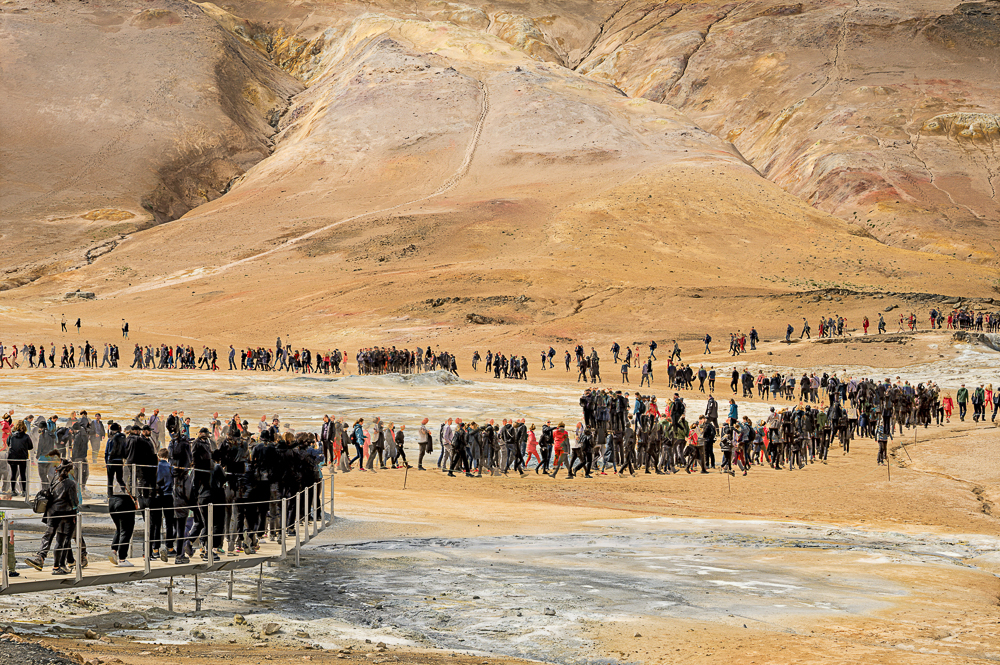
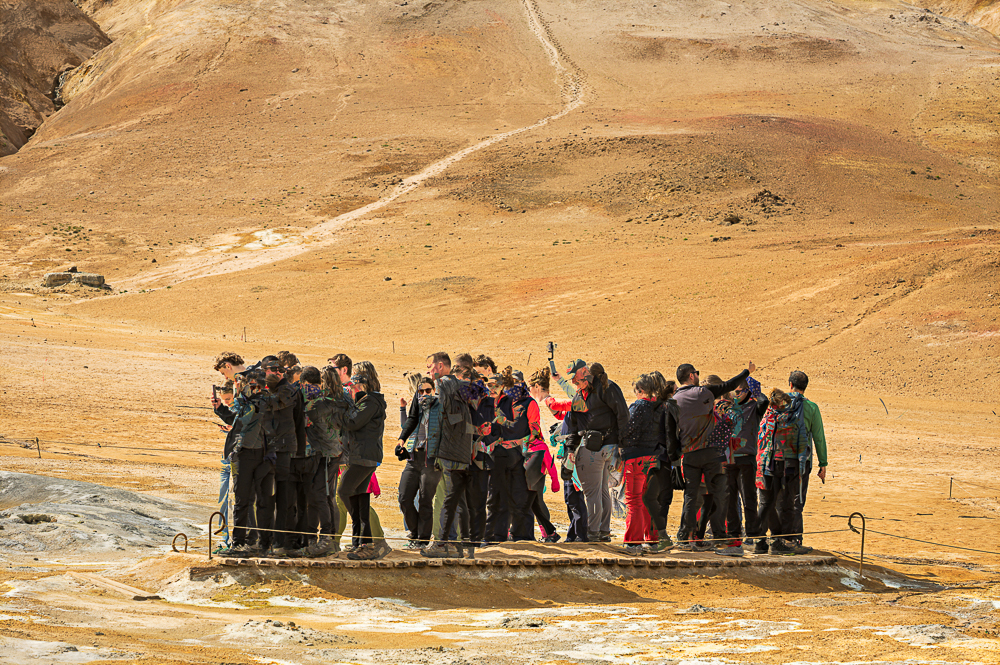
Hverarönd (also known as Hverir or Námaskarð) is a well-known high-temperature geothermal area in northern Iceland, situated directly off the Ring Road near Lake Mývatn and easily accessible to travelers.1 The site’s appeal lies in its fumaroles, boiling mud pots, hot steam vents, and colourful mineral-rich ground, creating an almost otherworldly landscape that makes Iceland’s geothermal forces tangible. Because of hot, unstable ground and the risk of burns or collapse, clearly marked paths and wooden walkways are provided, and visitors are instructed to stay on them to ensure both safety and the protection of the delicate terrain. © Eckart Bartnik
© Eckart Bartnik
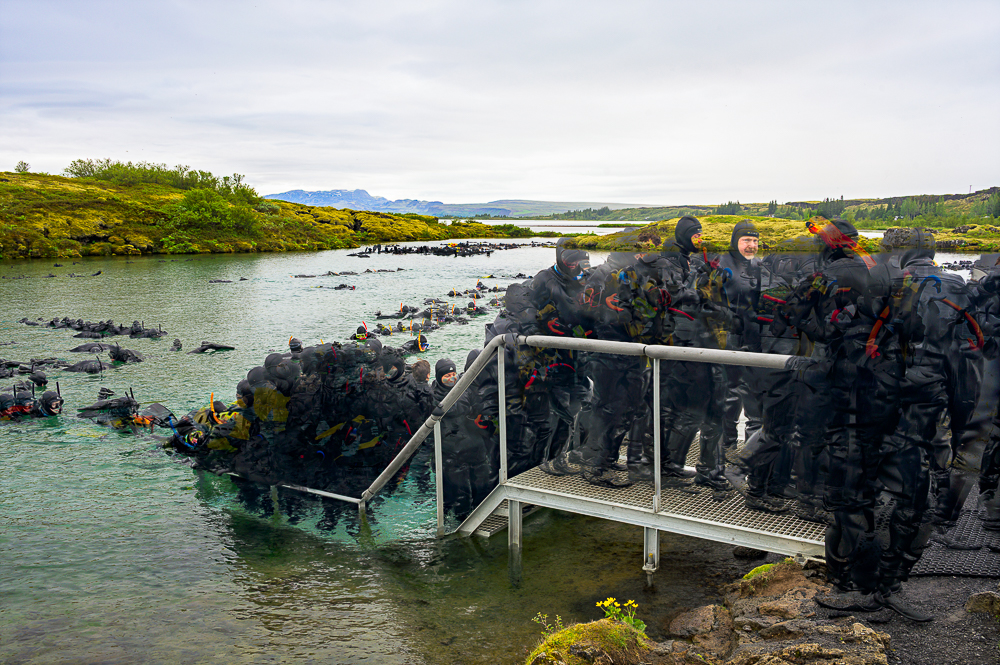
In 2018, approximately 62,000 people visited the Silfra fissure, predominantly snorkelers, with fewer divers. Its appeal lies in its unique location between the North American and Eurasian tectonic plates and in the exceptionally clear visibility of over 100 meters, made possible by filtered glacial meltwater. Due to high demand, access, group sizes, and safety standards have been regulated to protect the sensitive environment and to prevent accidents. © Eckart Bartnik
Hverarönd (also known as Hverir or Námaskarð) is a well-known high-temperature geothermal area in northern Iceland, situated directly off the Ring Road near Lake Mývatn and easily accessible to travelers.1 The site’s appeal lies in its fumaroles, boiling mud pots, hot steam vents, and colourful mineral-rich ground, creating an almost otherworldly landscape that makes Iceland’s geothermal forces tangible. Because of hot, unstable ground and the risk of burns or collapse, clearly marked paths and wooden walkways are provided, and visitors are instructed to stay on them to ensure both safety and the protection of the delicate terrain. © Eckart Bartnik
© Eckart Bartnik
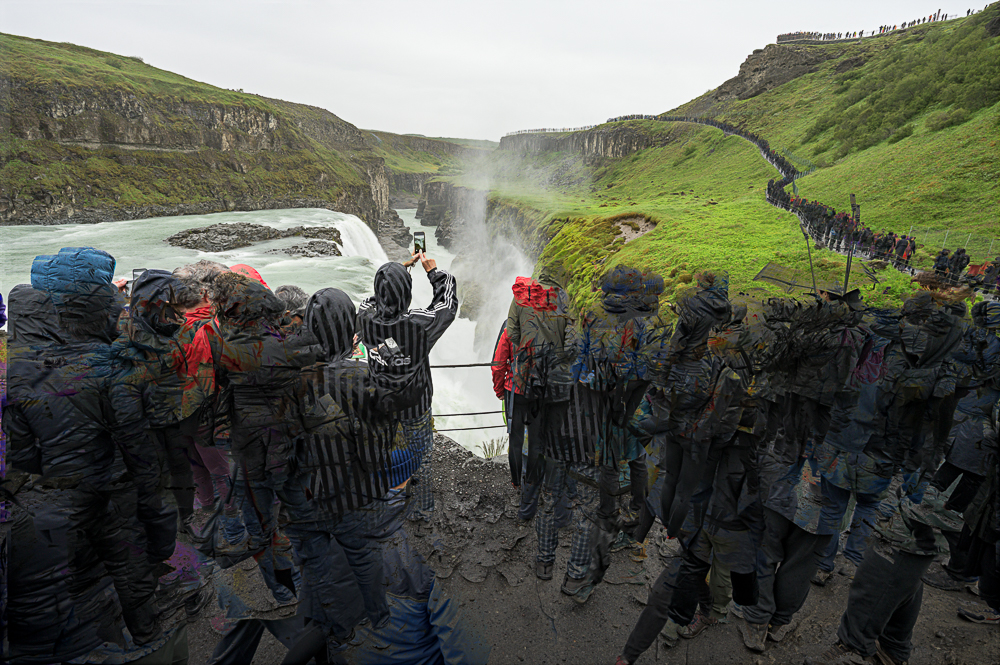
View close to the main waterfall. According to surveys, the Geysir/Gullfoss area is visited by around 59.4% of travelers to Iceland; with nearly 2.3 million foreign overnight visitors in 2024, this corresponds to roughly 1.3 million visits. The site’s appeal lies in the two-tiered waterfall with a total drop of about 32 meters into a narrow canyon, the constant spray, and the frequent rainbows that give the scene a stage-like quality. To ensure safety and protection, paths, stairways, and viewing platforms have been expanded; during icy conditions or increased risk, sections are closed and secured with barriers and warning signs, though closures are sometimes ignored. © Eckart Bartnik
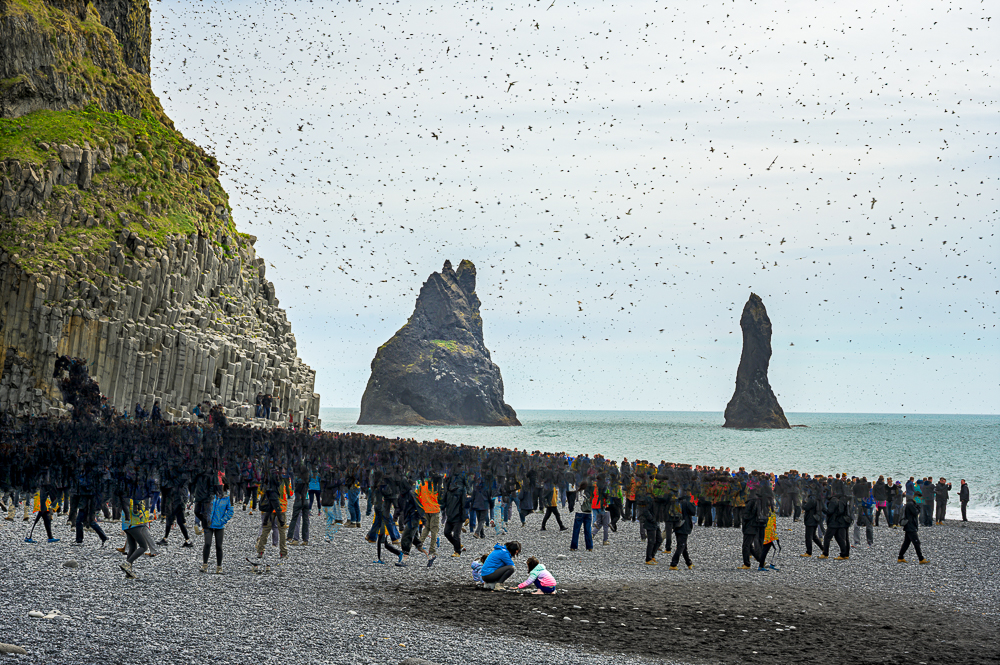
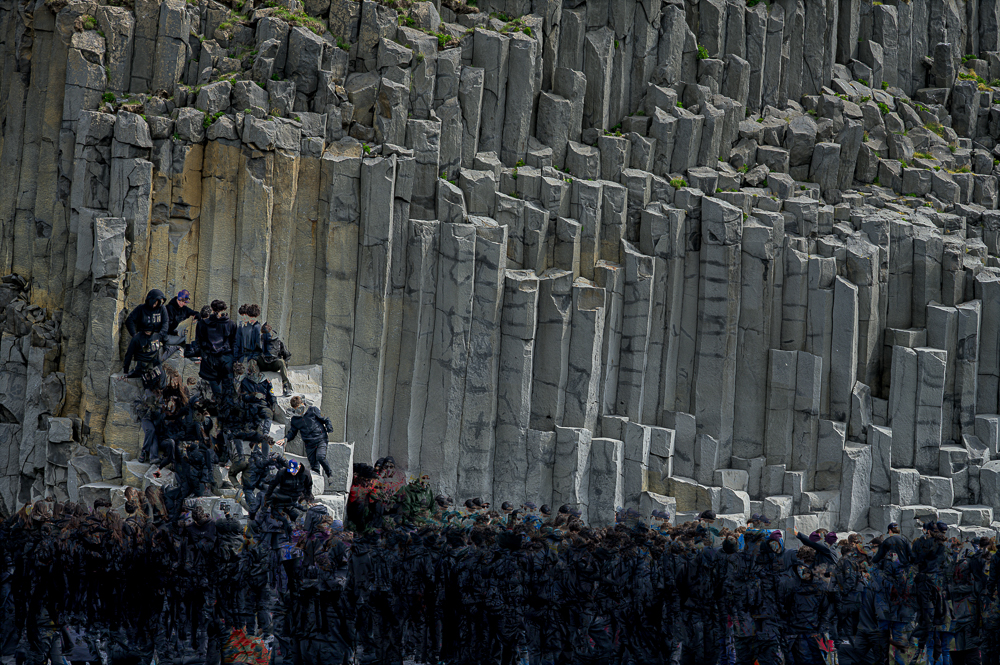
Around 133,000 visitors were reported for Reynisfjara in the first half of 2022, indicating very high, strongly seasonal footfall. Its appeal comes from the contrast of black volcanic sand, basalt columns, and the dramatic Reynisdrangar sea stacks set against the North Atlantic surf, which is also known for dangerous “sneaker waves.” In response to incidents, multilingual warning signage and a warning-light system (yellow/red) were introduced; visitor flow is also managed through parking management and fees. © Eckart Bartnik
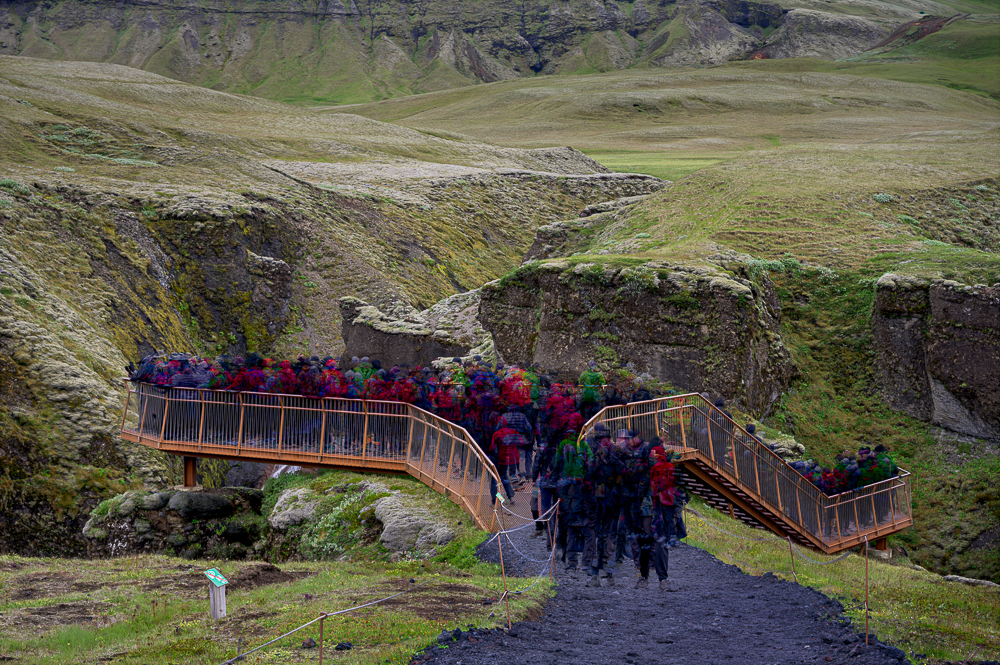
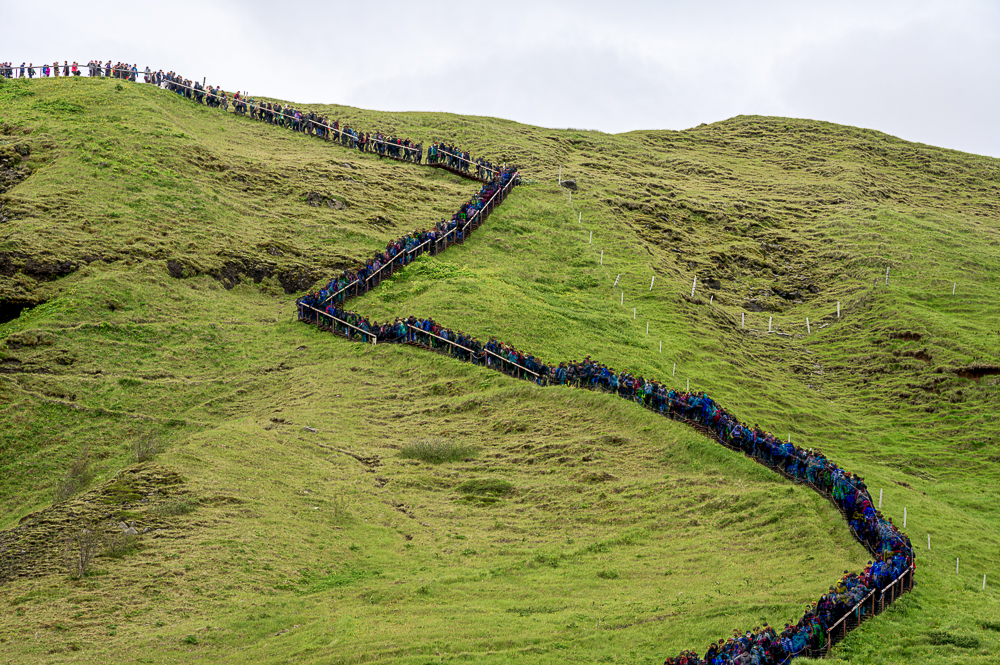
The path leading to the upper viewpoint of Skógafoss waterfall. Skógafoss is visited by approximately 43.6% of travelers to Iceland; with nearly 2.3 million foreign overnight visitors in 2024, this corresponds to roughly 1 million visits. Its appeal lies in the “perfect” curtain of water, with a 60-meter drop and 25-meter width, the constant mist, and the frequent rainbows. To manage visitor flow and fund infrastructure, a parking fee was introduced on 1 May 2025 and the parking area was expanded; during icy conditions, the stairs are partially closed and visitors are explicitly directed to remain on secured paths. © Eckart Bartnik
© Eckart Bartnik

Photographer: Eckart Bartnik
Nationality: German
Based in: Wiesbaden, Germany.
Website:  www.eckart-bartnik.com
Instagram: @eckart.bartnik

Eckart Bartnik, lives and works in Wiesbaden, Germany. He is a photographer with a background in the natural sciences and many years of experience in biological research.
Since the early 1980s, he has worked with analog and digital photography. His work has been shown internationally and published widely. In 2025, he was nominated for the Prix Pictet and is a member of the German Photographic Society (DGPh). His practice revolves around abstraction and reflection. He treats nature as material, condensing form and surface. His images explore tension, fracture, and ambiguity, resisting explanation and remaining open.