
© Moises Saman

Saman

Moises Saman

2024 — Sudan

About this series

In June 2024, Moises Saman travelled to the Nuba Mountains with NYT reporter Nicolas Casey. At the time, the area was little-known, but it has since become a popular destination for Sudanese refugees fleeing the civil war that broke out in Khartoum in April 2023. The Nuba Mountains are home to a large traditional Sudanese population, organised into tribes. They consider themselves to be African, unlike their counterparts in northern Sudan who are Arab. The Sudan People’s Liberation Movement (S.P.L.M.), founded in 1983 by a group of black leaders, controls the region. They are rebels with a secular vision who encourage residents to identify as Nuba rather than by religion.
Saman has reported from the Middle East for over 20 years, but 2024 is the first year in which he has covered the conflict-torn country. Working alongside Casey, he pictured the impact of the war on communities, including resulting malnutrition and disease. They also interviewed chiefs of towns that had been targeted by attacks and documented the SPLM fighters in action. Their report won the Pulitzer Prize in 2025.
(In collaboration with Magnum Photos)
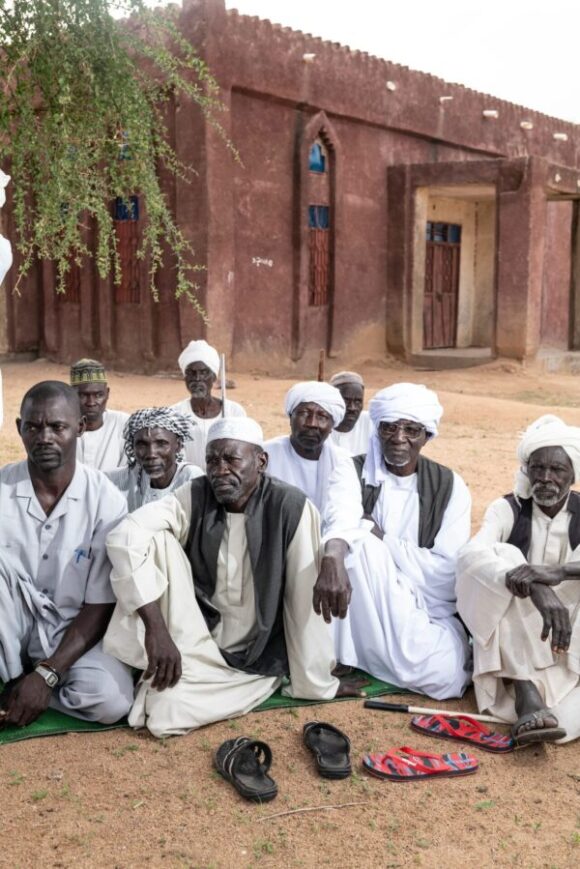
SUDAN. Mehtan. 16 June 2024. Viilagers during services for the Muslim holiday Eid al-Adha in the village of Mehtan. The SPLM refers to Mehtan as a “newly liberated” village; the Sudanese army lost it after a protracted battle with the rebels last summer. © Moises Saman
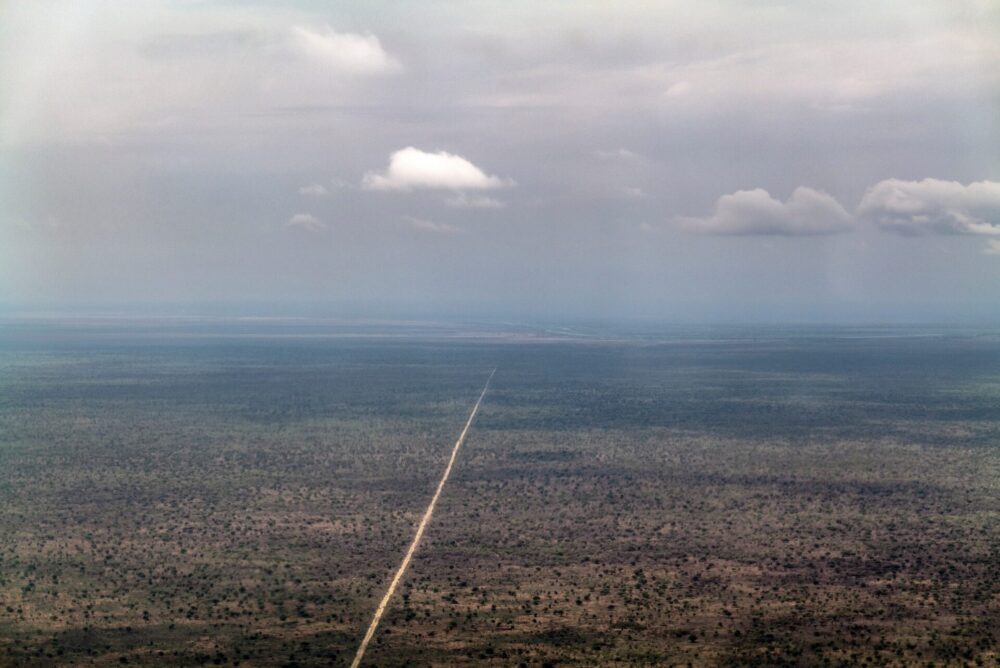
South Sudan. 12 June, 2024. © Moises Saman Aerial view of a road amid the bush near the border between South Sudan and Sudan.
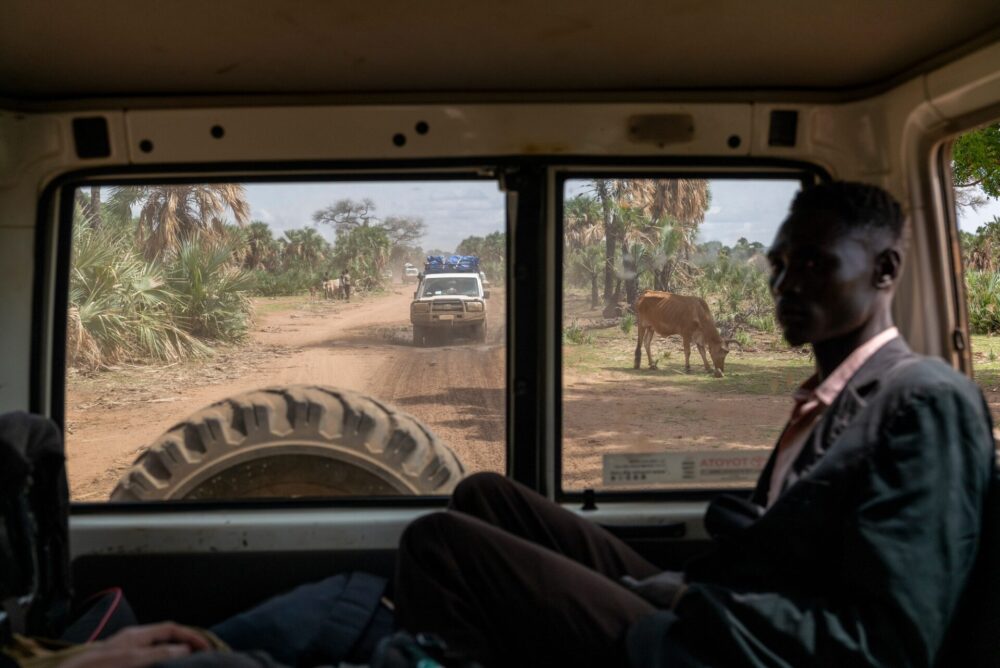
Nuba Mountains, Sudan. 13 June, 2024. © Moises Saman A convoy of NGO vehicles driving across the Nuba Mountains en route to Kauda.
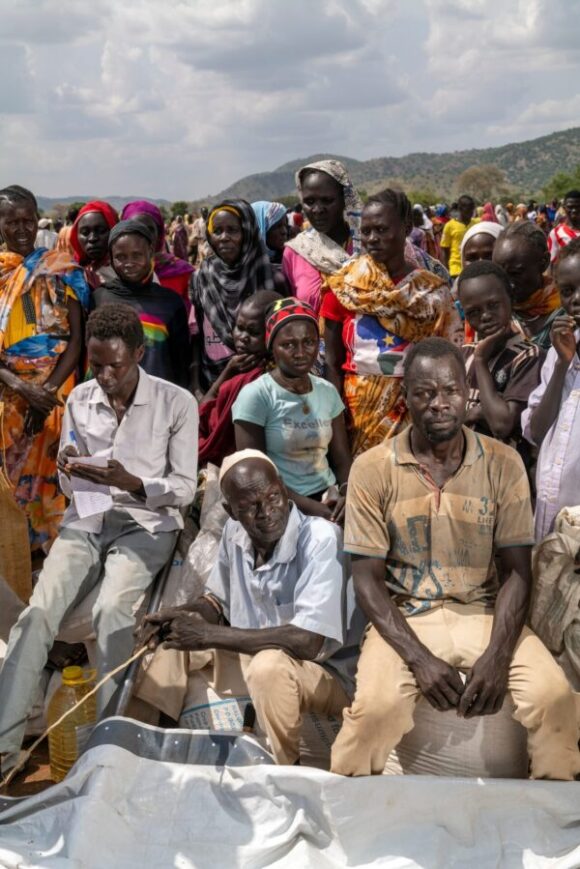
Kauda, Sudan. 20 June, 2024. © Moises Saman A food distribution organized by the World Food Programme in Kauda, the SPLM-N rebel capital in Sudan’s Nuba Mountains.
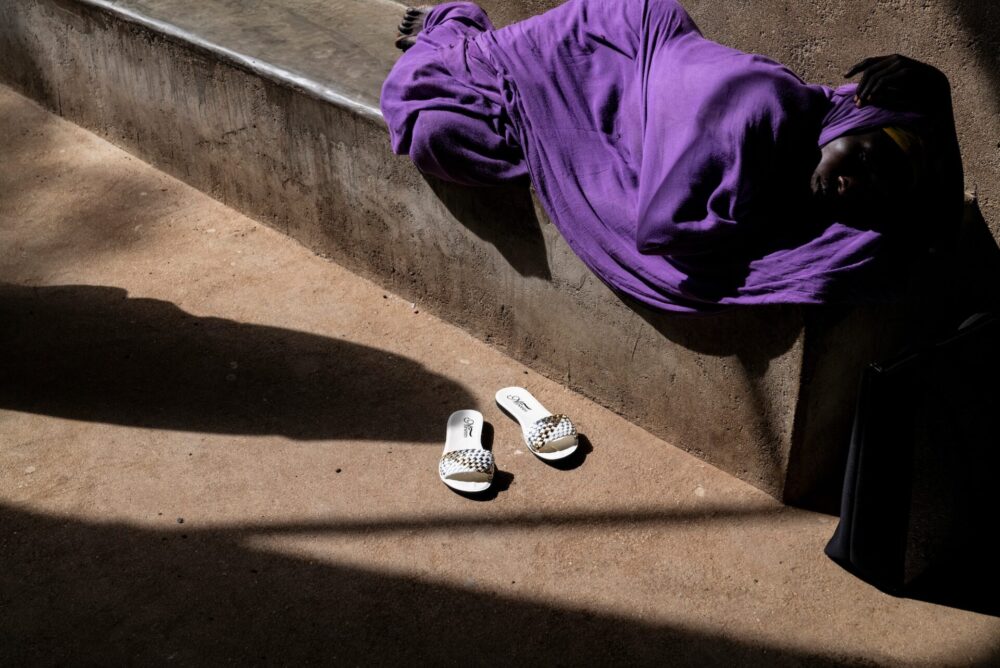
SUDAN. Lewere. 14 June 2024. A woman awaits to be treated at hospital operated by German Emergency Doctors in the village of Lewere, Nuba Mountains. © Moises Saman
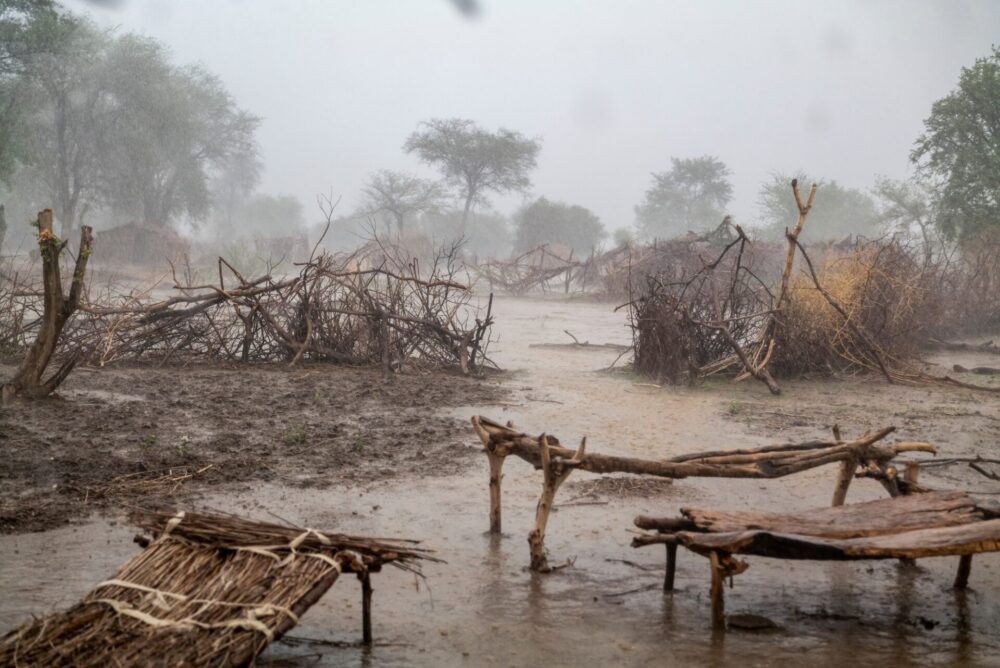
Julud, Sudan. 18 June, 2024. © Moises Saman Heavy rain pours down in the Tanto IDP camp on the outskirts of the rebel-held town of Julud in Sudan’s Nuba Mountains. Sudan’s war has left at least 10 million people fleeing their homes — more than the entire population of New York, and currently the largest displacement of people in the world. One U.S. estimate in March said that 150,000 people might be dead in the fighting, though the chaos has left an accurate body count impossible. Hospitals have collapsed. Khartoum’s international airport is a ghost town, destroyed by militiamen. Western Darfur, on the country’s frontier with Chad, stands besieged by paramilitary groups who have rekindled the ethnic slaughter that made Darfur a household name in the early 2000s. And then there is the threat of starvation, the specter that haunts nearly all conflicts in Africa and makes no distinction between civilian and combatant. More than 15 million Sudanese did not have enough to eat even before the war began. Since then, the fighting has destroyed not just schools and roads, but also farms and agricultural infrastructure, as the warring parties pillage the countryside to sustain themselves. The possibility of a great famine like the one that ravaged Ethiopia in the 1980s has become real again.
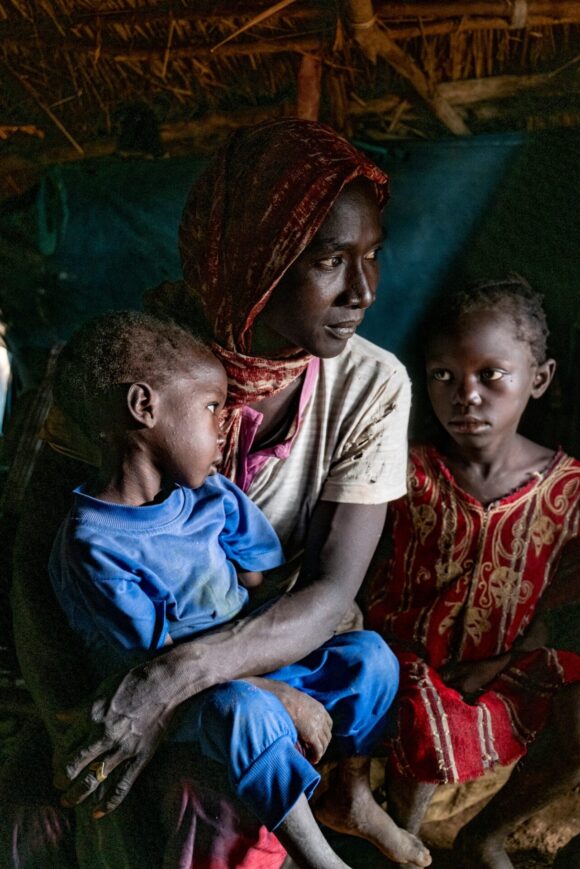
Julud, Sudan. 18 June, 2024. © Moises Saman Aram Margani, 30, holds her son Mohammed as her daughter Raja sits next to them inside a hut in the Tanto IDP camp on the outskirts of the rebel-held town of Julud. Aram and her family escaped their village of Tukma during an attack by an Arab nomadic tribe aligned with the RSF. Sudan’s war has left at least 10 million people fleeing their homes — more than the entire population of New York, and currently the largest displacement of people in the world. One U.S. estimate in March said that 150,000 people might be dead in the fighting, though the chaos has left an accurate body count impossible. Hospitals have collapsed. Khartoum’s international airport is a ghost town, destroyed by militiamen. Western Darfur, on the country’s frontier with Chad, stands besieged by paramilitary groups who have rekindled the ethnic slaughter that made Darfur a household name in the early 2000s. And then there is the threat of starvation, the specter that haunts nearly all conflicts in Africa and makes no distinction between civilian and combatant. More than 15 million Sudanese did not have enough to eat even before the war began. Since then, the fighting has destroyed not just schools and roads, but also farms and agricultural infrastructure, as the warring parties pillage the countryside to sustain themselves. The possibility of a great famine like the one that ravaged Ethiopia in the 1980s has become real again.
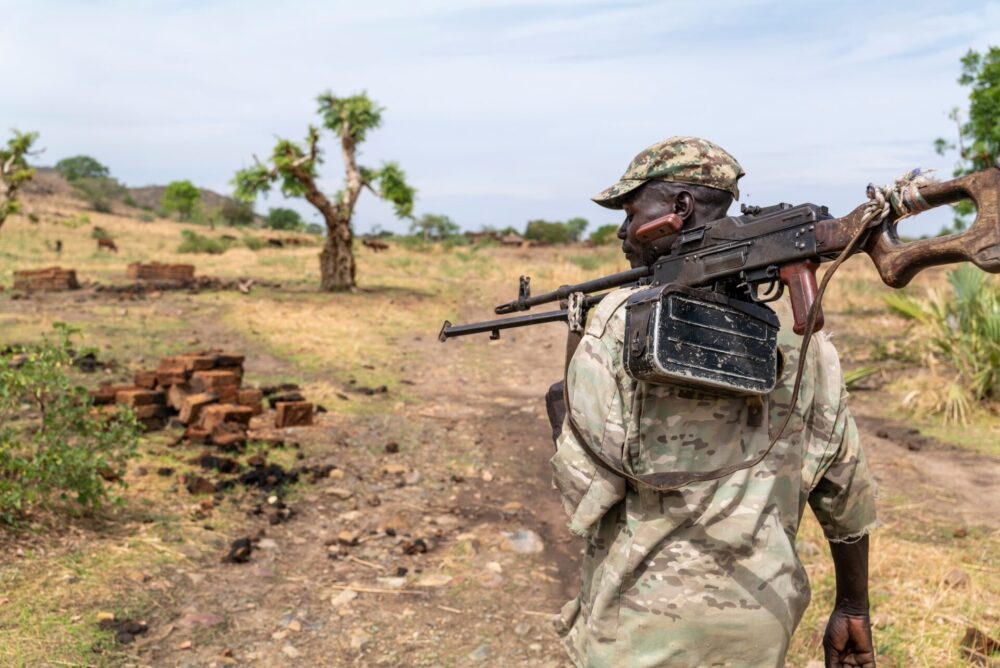
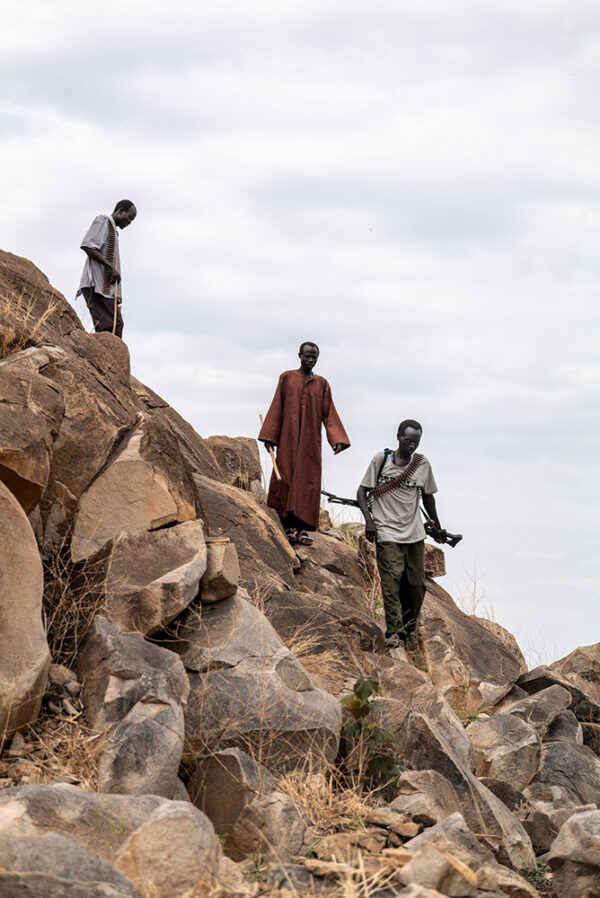
Kadugli countryside, Sudan. 22 June, 2024. © Moises Saman A SPLM-N rebel fighter walks toward a front line position near the government-controlled city of Kadugli.
Hajar Jawad, Sudan. 16 June, 2024. © Moises Saman
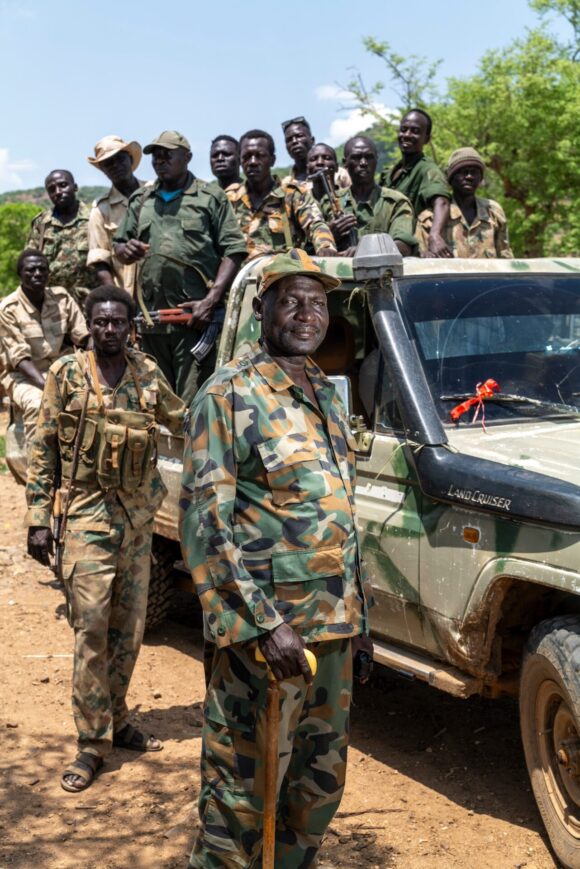
Kadugli Province, Sudan. 21 June, 2024. Lt. Gen. Jagod Mukwar Marada, the SPLM deputy chairman, surrounded by some of his men at a rebel base near Kadugli, the capital of the Sudanese state of South Kordofan and the largest city in the Nuba Mountains.
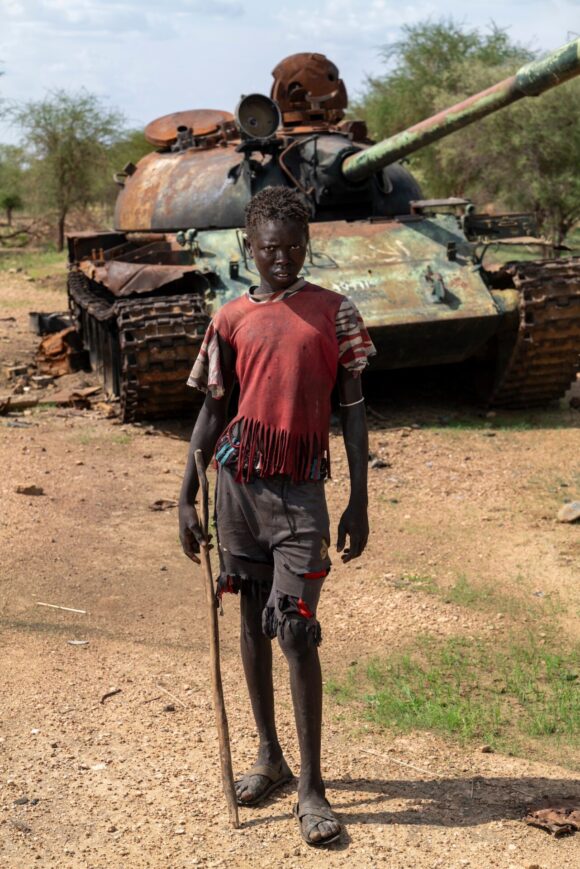
Hamra, Sudan. 21 June, 2024. © Moises Saman Abil Musa, a 15 year-old Nuba cattle herder stands in front of a Sudanese Army tank destroyed by SPLM-N rebels during fighting on the outskirts of Kadugli, the capital of the Sudanese state of South Kordofan and the largest city in the Nuba Mountains.

Photographer: Moises Saman
Nationality: Spanish – Peruvian
Based in: Amman, Jordan
Website: www.magnumphotos.com/moises-saman
Instagram: @moisessaman

Moises Saman was born in Lima, Peru, in 1974 to a mixed Spanish and Peruvian family. At the age of one, he relocated with his family to Barcelona, Spain, where he spent most of his youth. He studied communications and sociology in the United States at California State University, graduating in 1998. It was during his last year at university that Saman first became interested in becoming a photographer, influenced by his studies in visual sociology, and the work of a number of photojournalists who had been covering the wars in the Balkans.
Saman blends traditional conflict photography with a deeply personal point of view. For more than 10 years, he has been concerned with the humanitarian impact of war in the Middle East, documenting both the front line of daily suffering and the “fleeting moments on the periphery of the more dramatic events.”
He has worked on many editorial commissions, including covers for Time magazine’s Person of the Year (2018), which featured several journalists who had been targeted for their work. For this prestigious assignment, Saman photographed 26 journalists during trips to seven countries, including Myanmar, Bangladesh, Russia, Germany and Mexico.
Saman’s work has received awards from World Press Photo, Pictures of the Year and the Overseas Press Club, and his photographs have been shown in several exhibitions worldwide. In 2015, he was given the highly regarded Guggenheim Fellowship for his photojournalism project on the Arab Spring. In 2023, Saman was named a Nieman Fellow at Harvard University, and he published Glad Tidings of Benevolence, a book that combines photographs and disparate documentation and texts from his time as a photojournalist covering the US-led invasion and occupation of Iraq and the years following.
Saman joined Magnum Photos in 2010 and became a full member in 2014. He is currently based in Amman, Jordan.