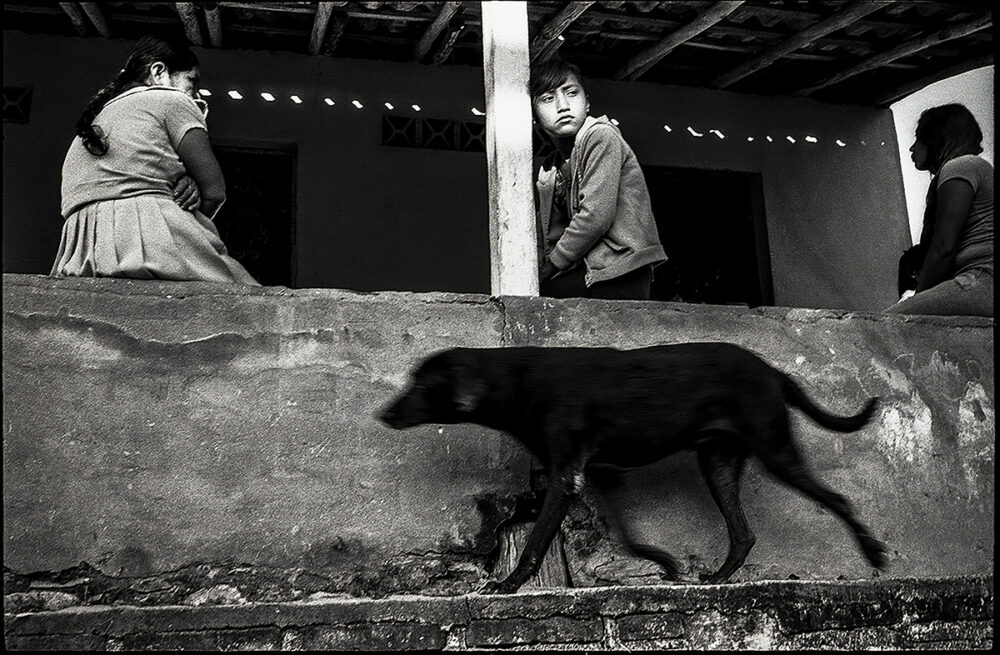

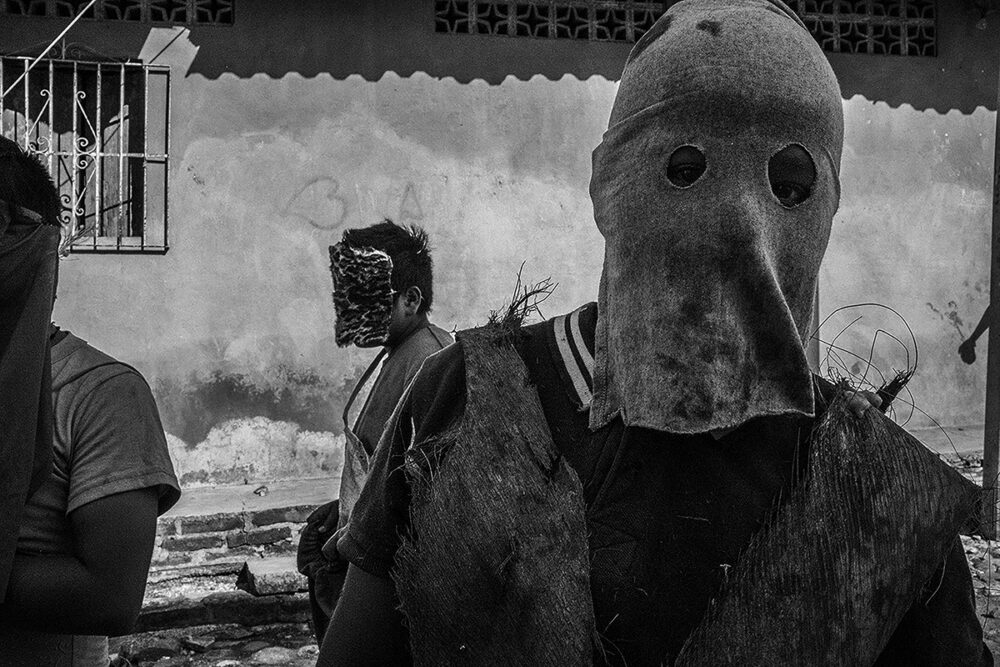
In Santa Maria de Ostula every September 10 and December 13 for centuries the indigenous community has been carrying out a unique form of street theater that was brought from Spain to the region in the 16th century. When it arrived the European battle between the Moors and Christians was mixed with indigenous cultural elements to form a syncretist tradition that exists intact today. Here we can see what are called “Xayacates” which are ghost like figures that alongside the Moors and Christians haunt the street theater and represent an element of chaos and uncertainty- a physical manifestation of the rupture of all and any social norms during war. These traditions that are carried out only in Ostula are an example of the cultural traditions that these current social movements in Mexico are trying desperately to protect and preserve. © Scott Brennan

Autonomous Movements in Central Mexico

Scott Brennan

2006 — Mexico

About this series

This photographic project focuses on three indigenous populations working to enact social and environmental justice in the face of some of the world’s most dangerous elements of organized crime and corruption. The communities are Santa Maria de Ostula, Cherán K’eri and San Lorenzo de Azqueltán in the notoriously violent states of Michoacán and Jalisco in central México. These municipalities have begun social movements of culturally indigenous peoples establishing autonomous governments in response to rampant violence, corruption, environmental degradation and the failure of the social contract. Their claims to the right to self-determination and autonomy are based on a clause of the Mexican Constitution. This clause, Article 2, allows indigenous towns to rule themselves outside of the institutionalized Mexican political system. In response to violence linked to drug cartels, international mining and tourism companies, and corruption within both state and federal institutions, these communities ousted Mexican political parties and established local grassroots governments and security forces. They also began defending their borders to secure peace and preserve important elements of their cultural heritage.
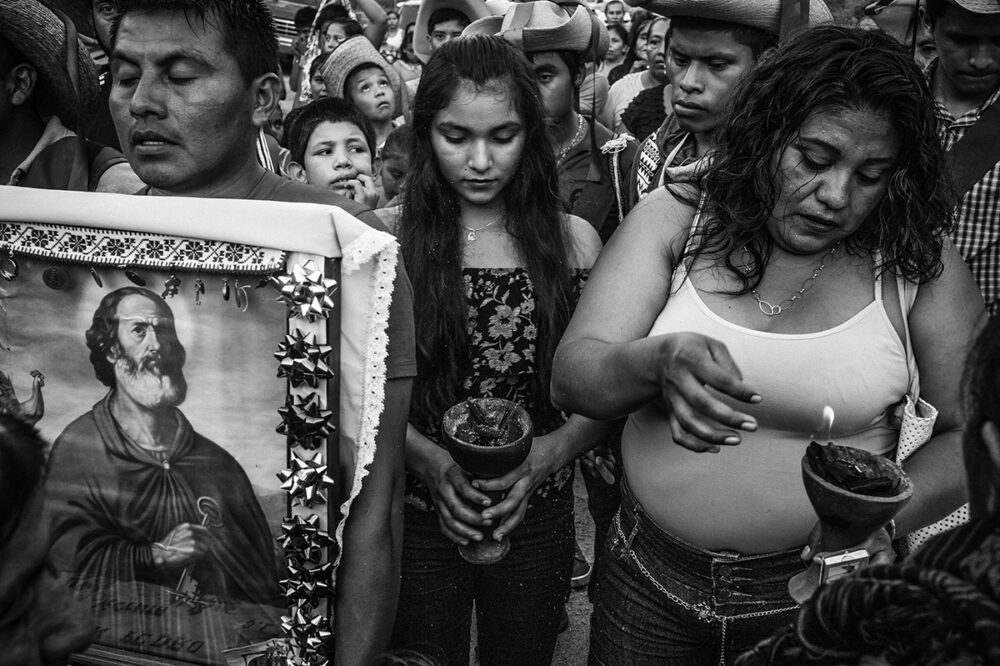
In the hamlet of Palma Sola within Santa María Ostula residents welcome the Virgin of Ostula with a syncretist religious procession. October 24, 2017. © Scott Brennan
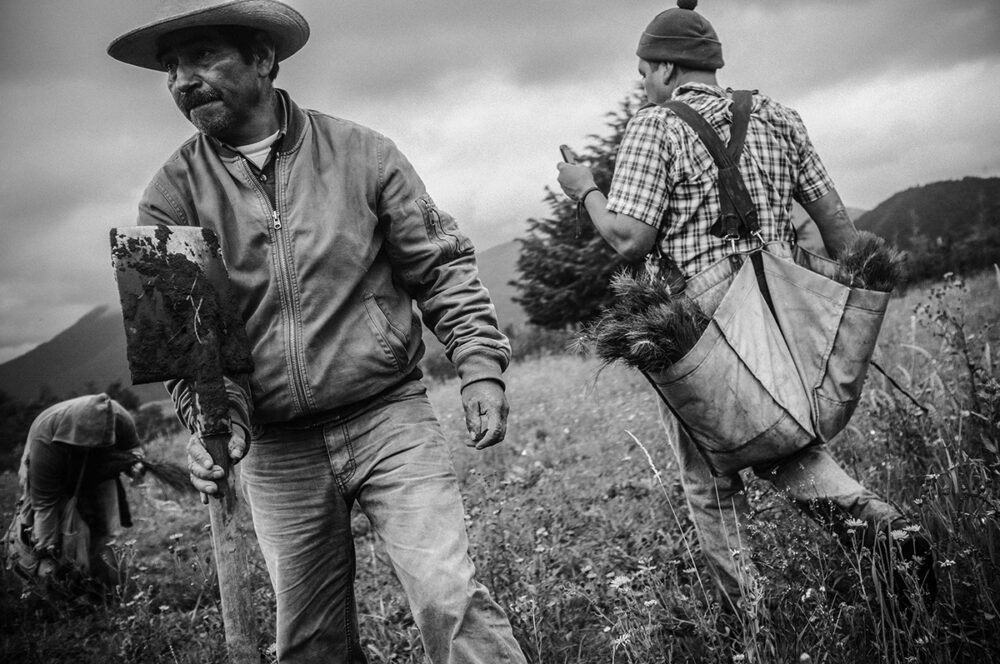
From July to August Cherán K’eri gathers volunteers to hike into the forest, where snipers have murdered community members, in order to plant new pine saplings in the decimated, deforested areas. Teenagers, elders and small children make the trek into the forest protected by heavily armed guards on horseback, to reforest the areas that were cut down. Comunero (community member and movement supporter) Miguel Geronimo says, "What we're doing here will be well worth it someday soon. Our children and grand children will once again have shade to play in and trees to stare up at and dream into." © Scott Brennan
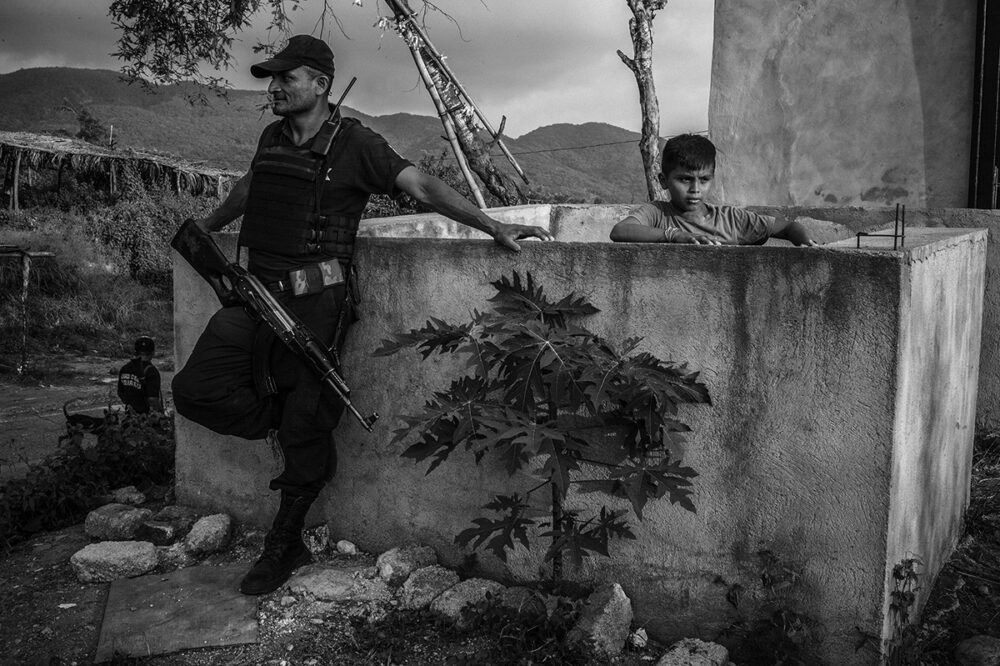
“El Gavilán,” (the Hawk) a security leader of Ostula is seen here at territory’s northernmost point on the coastal road. Here the security forces have set up a barricade checking who enters and exits Ostula. El Gavilán leans against a new concrete construction which is part of an effort to physically establish a presence on their northernmost border. On this border the community suffered invasions. In 2009, this is where the movement began with the reclamation of illegally held land. October 22, 2017. © Scott Brennan
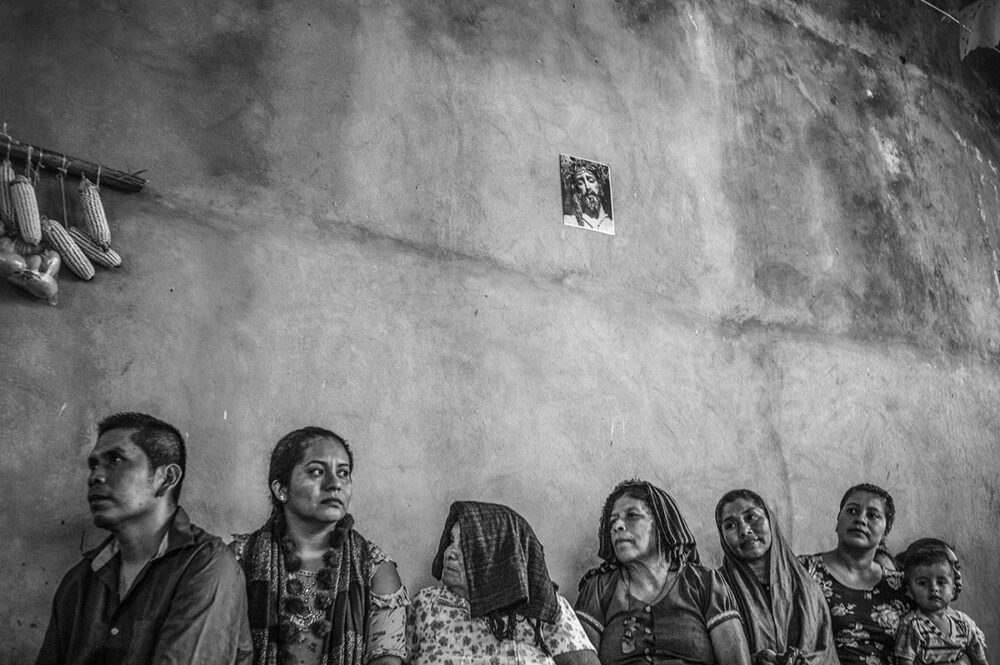
The church in the hamlet of La Ticla in Santa María Ostula doubles as a meeting place and a temple of worship. Here community members listen to a political/cultural event planning board and later in the afternoon celebrate a mass of first communions. June 28, 2019. © Scott Brennan
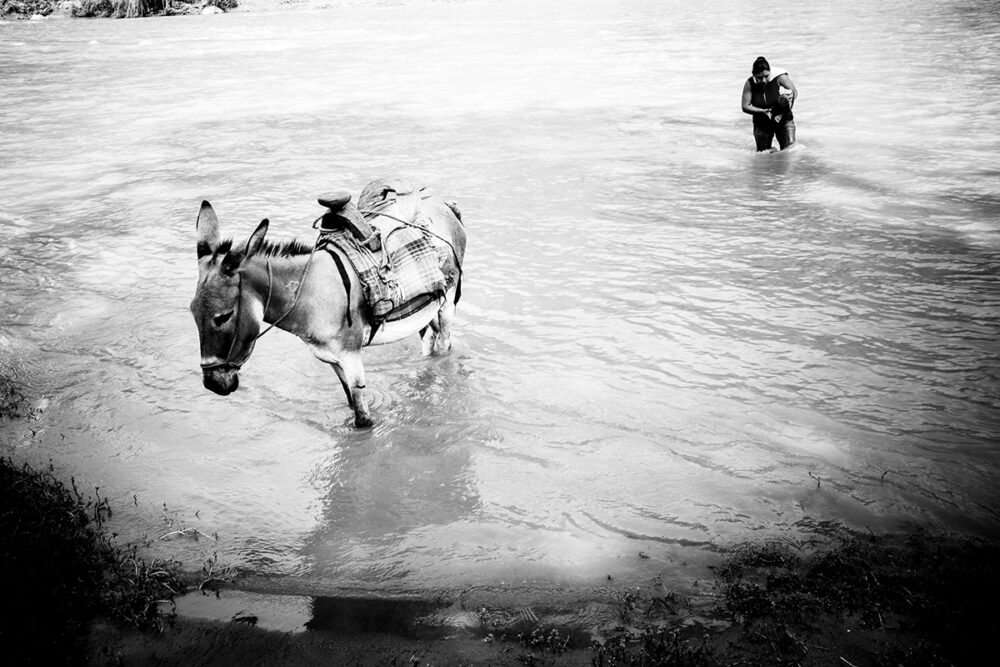
Martha, a woman of 22 years, crosses the Ostula River with her donkeys. She is harvesting watermelon on the top of a nearby mountain. To harvest seven watermelons she spent a full day travelling. Much of the economy in Ostula is agricultural and relies upon traditions dating back hundreds of years. Residents in resistance are concerned these ways of life will be eradicated if their movement fails. September 8, 2017. © Scott Brennan
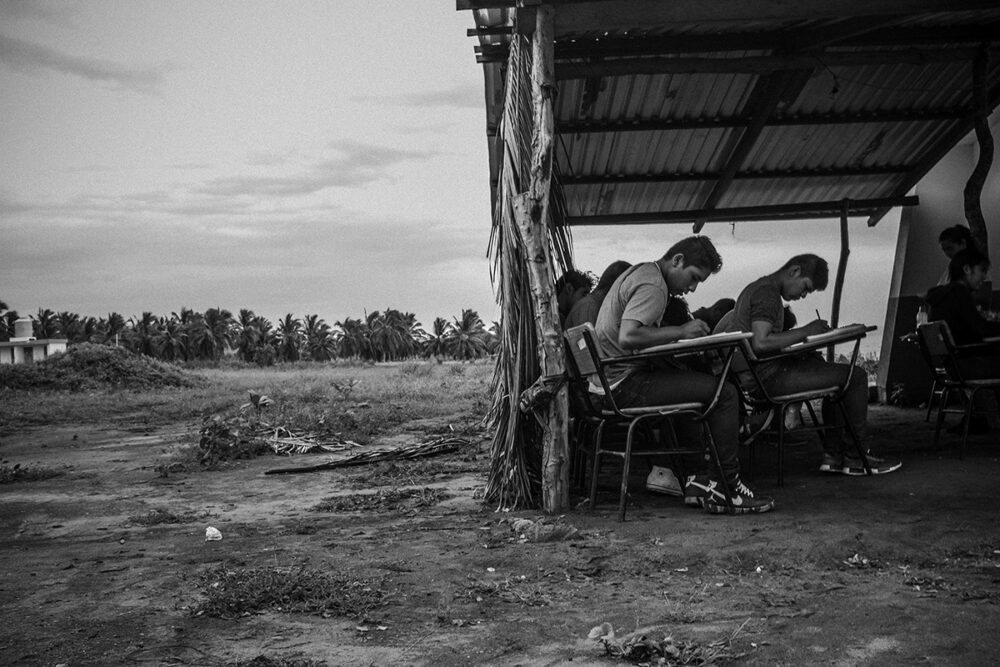
High school students in the hamlet of La Ticla learn English in a school overlooking the Pacific Ocean. This land has been sought after for decades by the federal and state governments for the development of a huge tourist resort destination. International tourism companies lust over the potential for profit on the beautiful, largely virgin coastline. Federal and state governments wish to collect millions of dollars in tax money and benefit from foreign companies building infrastructure in the zone. Similarly the territory of Ostula stretches far into the mountains from the coast where mining outfits have found evidence of billions of dollars worth of minerals. The virgin beaches have functioned as a destination for organized crime to land their illicit shipments that have crossed the ocean from Colombia. The social movement aims at keeping all of these interests at bay. September 4, 2017. © Scott Brennan
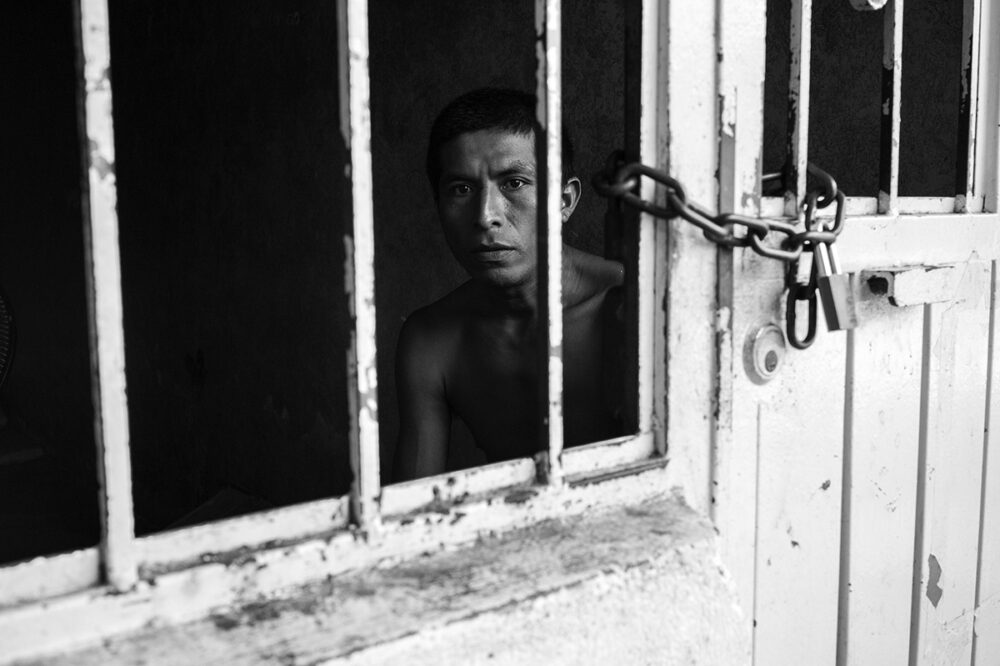
Santa María Ostula and its security force deal with internal policing issues. Seen here a local man is locked up in a makeshift prison for a minor offense. This man was caught with a small amount of narcotics on him; most likely methamphetamine. In the zones around Ostula the production of methamphetamine not only fuels violence and corruption but deep social problems. October 31; 2017. © Scott Brennan
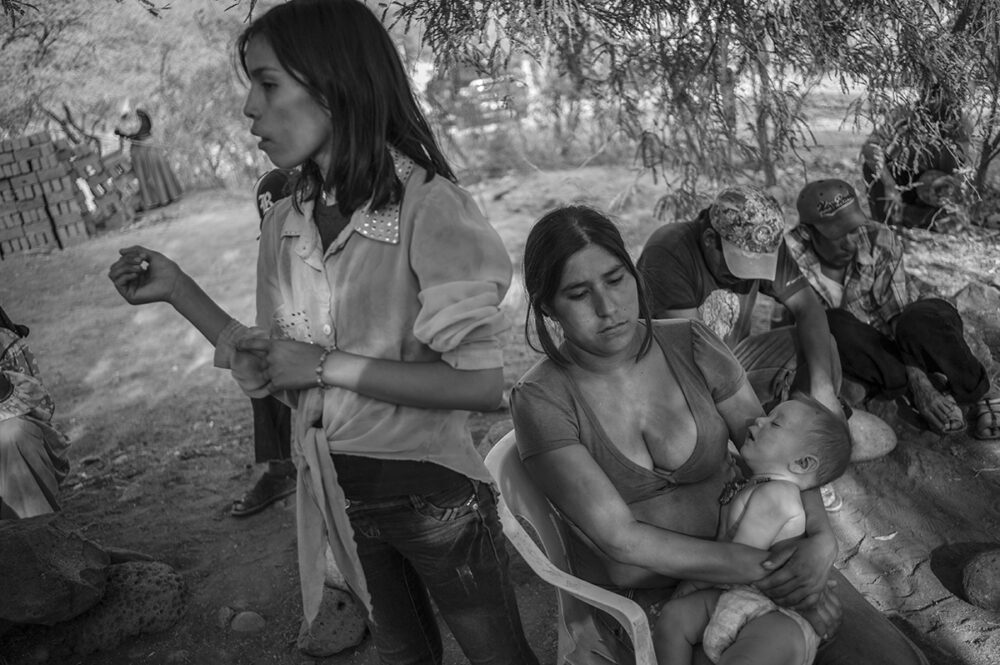
Young parents in San Lorenzo are unsure about the future of their community, its language and way of life. Parenting has been rendered difficult with little idea whether or not their traditions will survive the current attempts to rid the inhabitants of their vast ancestral homelands, to which their entire culture is connected. Regina, pictured here, regularly comments about how she has little idea about the future cultural environment in which her young boy will grow up, and how it depends upon the success of their autonomous movement. May 14, 2018. © Scott Brennan
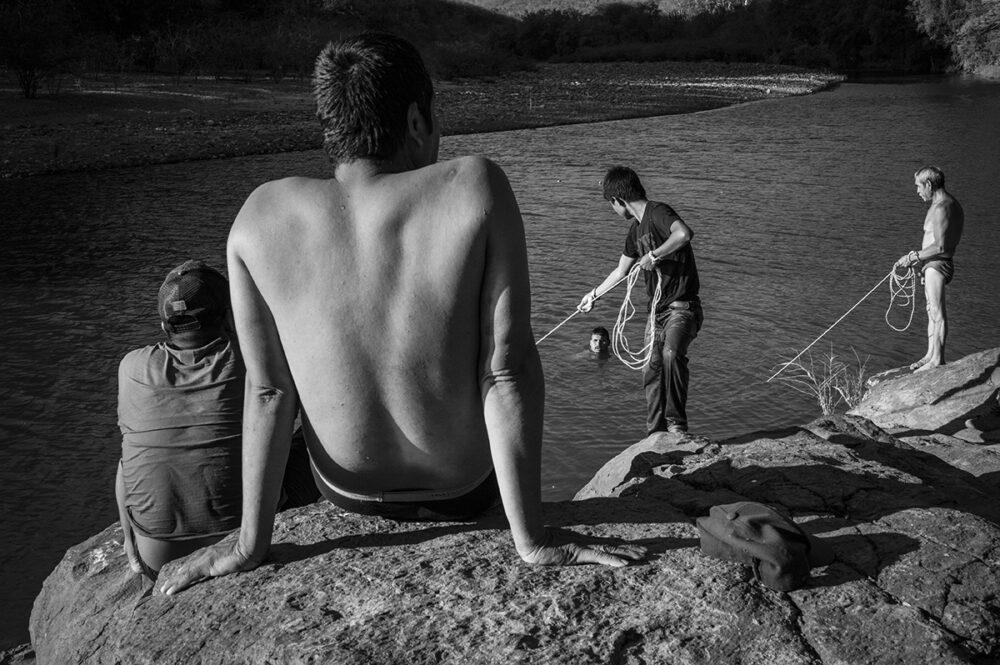
The River Bolaños runs directly past San Lorenzo de Azqueltán (Not in Ostula but a new town I was invited into to continue the larger project- they too are involved in a movement towards autonomy) and is one of México's few riverways that is pristine and free from contaminants and pollution from industry. Residents of the town rely upon the river as a source of food. If current plans to develop the area are successful this food and recreation source will be forever destroyed. April 25, 2018. © Scott Brennan
Local human and land rights activists in Ostula often travel with security as the threats to their social movement are so serious. With 41 community organizers and community leaders murdered or disappeared between 2009 and 2015, the movement realized that without a serious security force all of them would fall victim to the forces determined to topple them. Pictured here is the interior of a Toyota truck of one of the leaders of the movement in Ostula, with the weapon of his bodyguard which was confiscated from paramilitary organized crime groups after they left the territory. October 22, 2017. © Scott Brennan
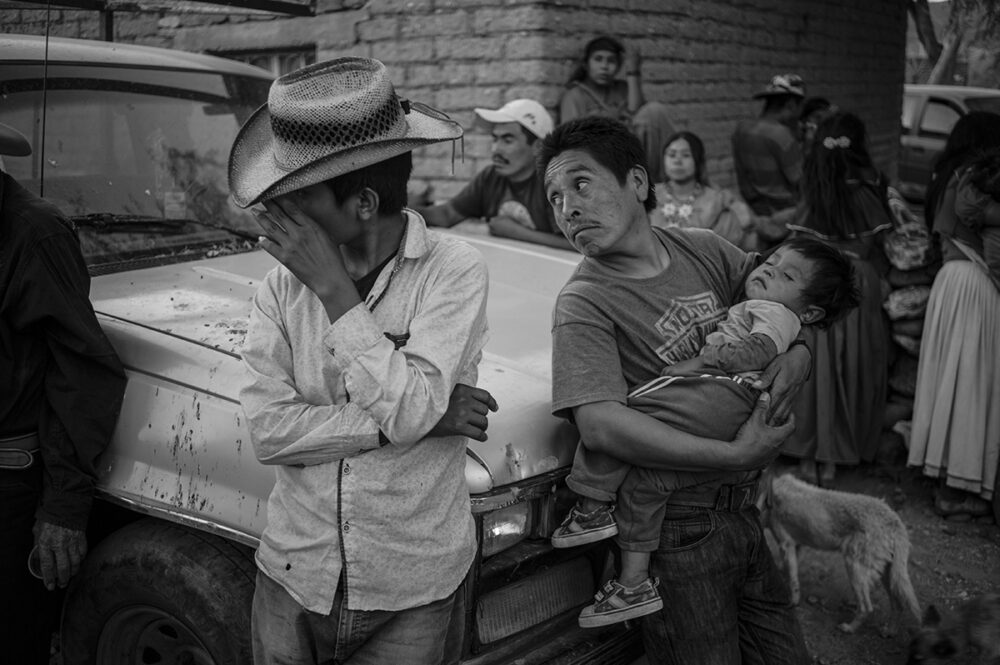
The center of San Lorenzo de Azqueltán is an ancient church from the 17th century. During the time period the church was built is when the Spanish crown ceded hundreds of thousands of acres to the community of Wixarikas in San Lorenzo. Today they are struggling for their land. Here, community members extemporaneously meet outside of the church for an emergency meeting after the kidnapping of one of their land rights activists. April 24, 2018. © Scott Brennan
Onlookers observe the preparation of the ancient local indigenous street festival theatre of “Xayacates” in Santa Maria de Ostula. © Scott Brennan

Photographer: Scott Brennan
Nationality: American
Based in: Mexico
Instagram: @scottbrennanphoto

Scott Brennan is originally from Long Island, New York and has been living in Mexico since 2010. He holds a Master’s degree from The London College of Communication in Photojournalism and Documentary Photography studied under Patrick Sutherland and Paul Lowe. He has freelanced for and been published by,The Washington Post, The New York Times, Time Magazine, The Ground Truth Project, the BBC, Herb Magazine, Tlachinollan, the CentroProhd (Mexico City), The Visual Anthropology Review, Leica Fotografie International, Amnesty International, and Le Point among others. His work has been awarded the Documentary Project Fund Grant, the International Leica Society Grant. His work, in 2019 was nominated for the Prix Pictet award.
In 2018 his project on post 2006 indigenous autonomous movements in central Mexico won first place in Pictures of the Year International’s Community Awareness category in the 2017-2018 contest.
His work has been shown and resides in the Latin American and Caribbean Studies Center at the State University of New York at Stony Brook, El Museo Casa de la Memoria Indómita in Mexico City, the Plaza of Tlatelolco in Mexico City with CentroProhd, La Casa Comunal in Cherán K’eri, La Casa Comunal (headquarters of autonomous government) in Xayakalan, La Casa de la Cultura Franz Tamayo in La Paz, Bolivia, the presidential palace in Zapopan, Mexico and University CAAV in Guadalajara, Mexico.
Scott currently has a free range chicken farm outside of Guadalajara México where he lives with his wife, children, dogs, chickens and sheep.